
Legacy Application Modernization Services
CodeIT delivers end-to-end legacy modernization, from stabilizing inherited applications to updating critical components, integrations, and engineering practices.
Business First
Code Next
Let’s talk
- Legacy Stabilization
- Phased Modernization
- Integration & Data Migration
- QA & DevOps Automation
- Architecture & Dependency Mapping
Modernize Legacy Applications Safely
Your legacy systems still run the business, but rising maintenance costs, technical debt, and risky releases are slowing progress.
Legacy application modernization, also called legacy system modernization, improves, restructures, migrates, or replaces existing software to remove technical limits while keeping the functionality that still delivers value. Outdated technology alone is not a reason to rebuild.
CodeIT’s legacy application modernization services stabilize existing applications and modernize them in phases, reducing operational risk, improving delivery speed, and extending the value of your technology investments.
We combine software architecture expertise with hands-on engineering delivery. Decisions are based on business priorities, technical dependencies, and the realities of your production environment.
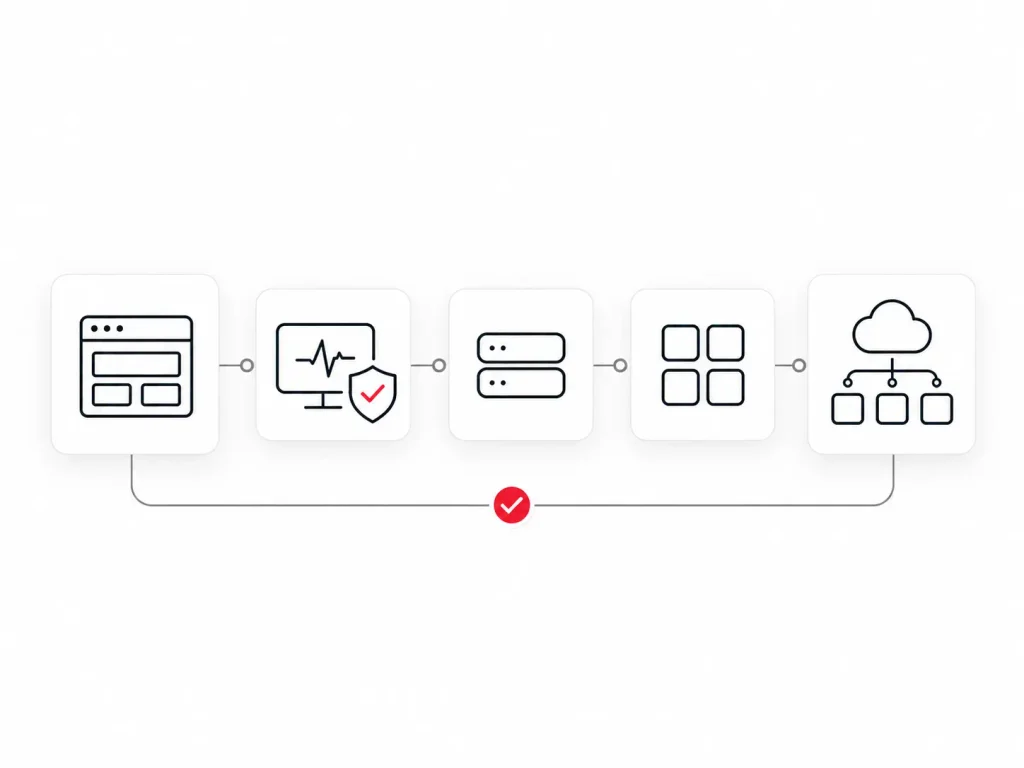
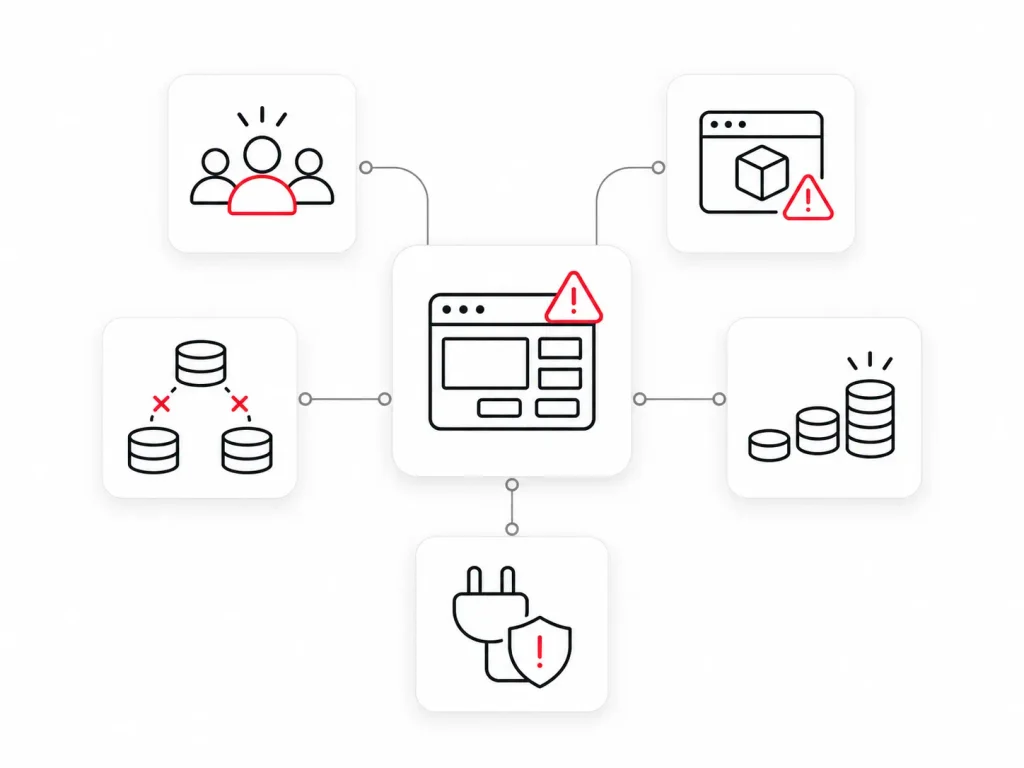
When legacy systems become a business risk
Sound familiar?
- Only a couple of people really understand how this system works.
- Even a small release takes weeks, and something always breaks.
- Our CRM, ERP and customer apps don’t share clean data.
- Maintenance eats the budget we need for new features.
- The vendor no longer supports the platform we depend on.
- A full rewrite sounds too risky, but doing nothing isn’t working either.
The goal is not to replace old technology for its own sake. It is to make critical software more reliable, economical to maintain, and easier to evolve.
Not sure how much risk your legacy software carries? Tell us about your system
Business First
Code Next
Let’s talk
Our legacy modernization services
CodeIT delivers end-to-end legacy modernization, from stabilizing inherited applications to updating critical components, integrations, and engineering practices.
Legacy Stabilization & Recovery
We investigate inherited applications, resolve production defects, and address performance bottlenecks that put daily operations at risk.
Scope: legacy application maintenance, performance optimization, infrastructure improvements, production support.
Deliverable: a stable, reliable system that supports operations and prepares the ground for modernization.
Phased Application Modernization
We refactor, rebuild, or replace components by business value, dependencies, and risk, so critical functionality is protected during the change.
Scope: refactoring, modularization, component redevelopment, platform migration, phased releases.
Deliverable: modernized functionality released in controlled, tested stages.
Legacy Integration & Data Modernization
We improve connections between legacy applications and modern platforms and fix fragmented data flows that limit cross-team visibility.
Scope: API development, integration redesign, data synchronization, migration planning and implementation.
Deliverable: reliable data exchange across systems and fewer barriers to future change.
QA & DevOps Modernization
We improve testing, deployment, and development practices to reduce release complexity and regression risk.
Scope: automated testing, CI/CD, version control modernization, release validation, production monitoring.
Deliverable: predictable, tested releases and a stronger delivery foundation for future change.
What legacy modernization delivers to your business
Protect Business Continuity
Reduce the risk of changing applications that support revenue-generating and business-critical processes.
Reduce Long-Term Maintenance Costs
Address technical debt, infrastructure inefficiencies, and fragile dependencies that consume engineering resources.
Accelerate Time to Market
Improve release predictability and reduce the effort needed to deliver new functionality.
Extend the Value of Existing Investments
Keep business-critical functionality where it still delivers value instead of replacing every component by default.
Remove Integration and Data Bottlenecks
Connect legacy applications with modern platforms so teams work from reliable, consistent data.
Reduce Dependence on Key Specialists
Document how the system works and spread critical knowledge beyond the few people who maintain it.
How we modernize legacy applications in phases
Business context determines what should change. Engineers own the implementation.
Discover & Map
Understand how the system works, what the business depends on, and where the main risks sit.
Output:
- current-state findings
- critical dependencies
- priorities.

Stabilize Critical Operations
Fix the production issues that create unacceptable risk or block modernization.
Output:
- a stable operating baseline.

Define the Modernization Path
Decide what to retain, refactor, rebuild, replace, or migrate, by business value, cost, dependencies, and transition risk.
Output:
- decisions
- target architecture direction
- roadmap.

Implement & Validate in Controlled Phases
Deliver approved changes in small increments with testing, release planning, and recovery procedures, then verify critical functionality in production. Where feasible, old and new components run together; other systems need staged cutovers or maintenance windows.
Output:
- tested
- released
- validated increments.

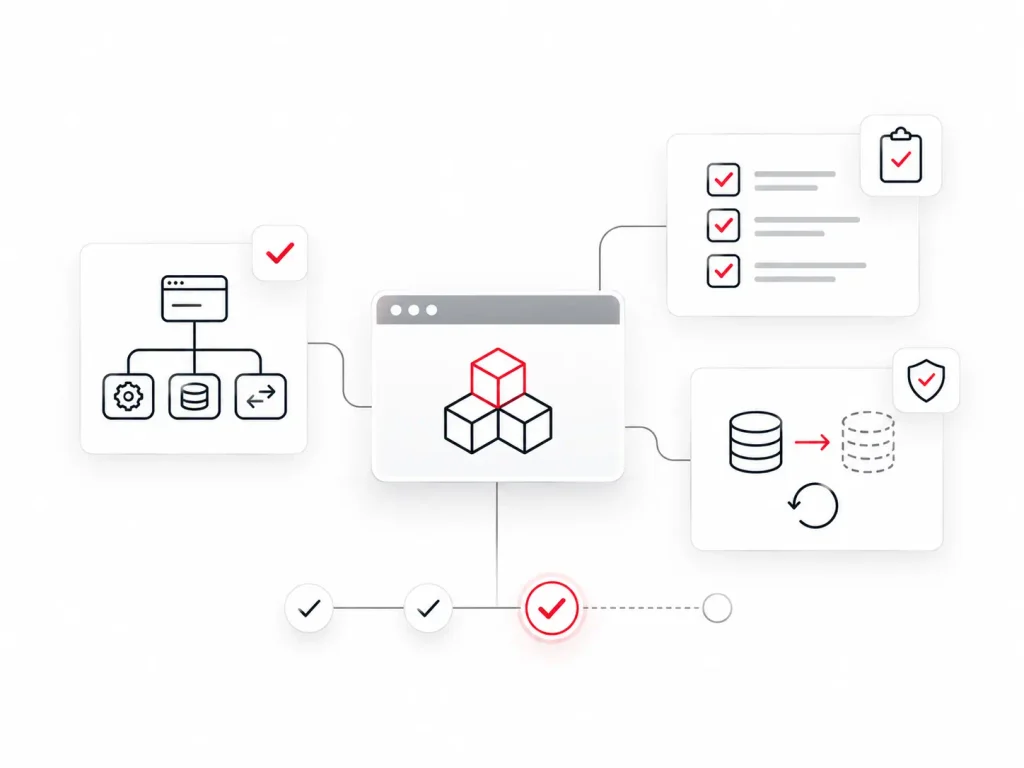
Every release is planned around what changes, what it could affect, and how readiness is proven.
- Dependency & impact control: affected applications, integrations, and data flows are identified before critical components change.
- Release readiness: acceptance criteria and tests per increment; critical functionality, integrations, and data are checked before release.
- Migration & recovery planning: data transitions, deployment steps, and, where applicable, rollback or other recovery options are defined before cutover.
Controls are agreed per project scope.
Refactor, rebuild, or replace your legacy application?
A full rewrite is not always the most effective strategy. The right choice depends on the system’s condition, the value of its functionality, and the risk of changing it.
Rehost
Move the application to new infrastructure with minimal code changes.
Best when hosting is the main constraint.
Replatform
Move to an updated platform with limited changes.
Best when the application is useful but its platform is outdated.
Refactor
Improve the internal structure of existing code while preserving behavior.
Best when functionality is valuable but technical debt makes changes difficult.
Rebuild
Redevelop components, or the application, on a different architecture.
Best when the existing design cannot support necessary changes.
Replace
Retire the application or component in favor of another product.
Best when it no longer provides enough business value.
Rehost or Replatform
Move the application to new infrastructure or an updated platform with limited changes.
Best when hosting or an outdated platform is the main constraint.
Proven in practice: legacy modernization delivered
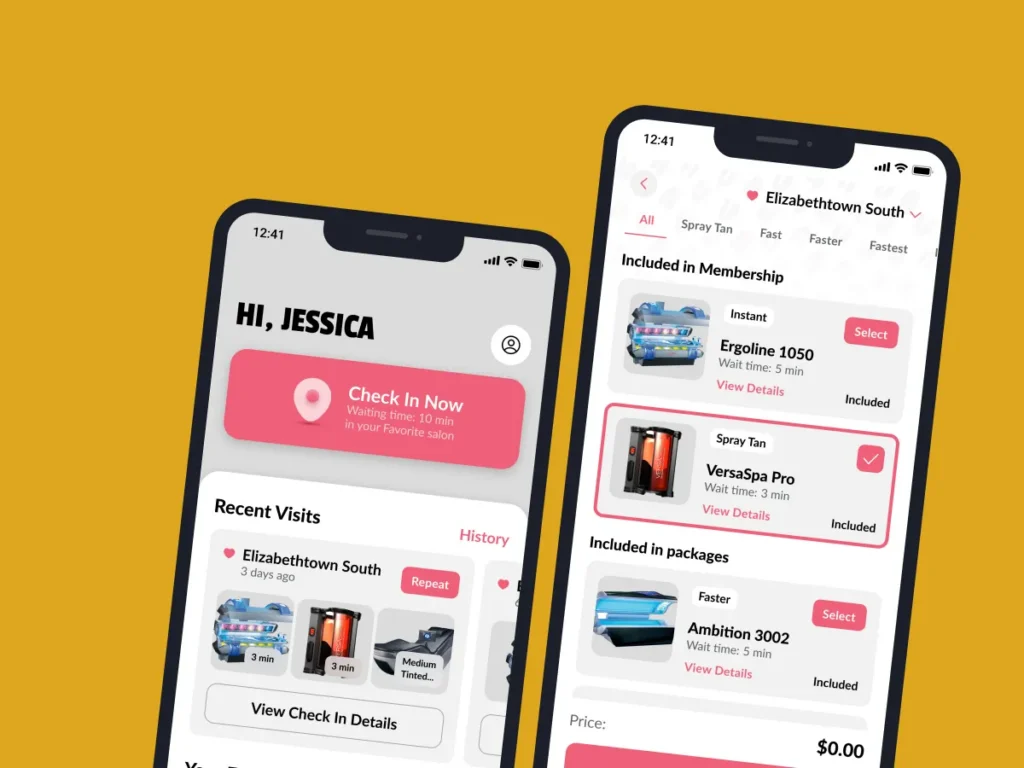
Sun Tan City: Stabilizing and Modernizing a Business-Critical Platform
Sun Tan City, one of the largest indoor tanning and wellness salon chains in the U.S., ran critical logic in outdated .NET modules and SQL stored procedures, with limited documentation and no CI/CD or automated testing. CodeIT stabilized the applications, fixed Azure performance issues, modularized legacy code, moved delivery to Git with CI/CD and automated tests, and rebuilt the customer apps in Flutter and React, following a phased roadmap designed to avoid downtime.
The results
- Mobile app ratings improved from 1.4 to 4.4 stars
- Release cycles shortened from months to weeks
- Some processes that took hours now run in minutes
- Reduced infrastructure costs through Azure optimization
CRM & ERP Migration for a North American Manufacturer and Distributor
A large North American manufacturer and distributor ran SugarCRM and Dynamics AX, legacy on-premises systems that needed significant maintenance and lacked vendor support. CodeIT designed a phased migration plan to minimize operational disruption, replaced SugarCRM with Dynamics 365 Sales, upgraded Dynamics AX to Finance & Operations, and rebuilt supporting applications with Power Apps and Power Pages. An eight-person team delivered the project.
The results
- 30–40% lower system maintenance costs
- 20–30% higher process efficiency
- 30–45% better cross-team visibility
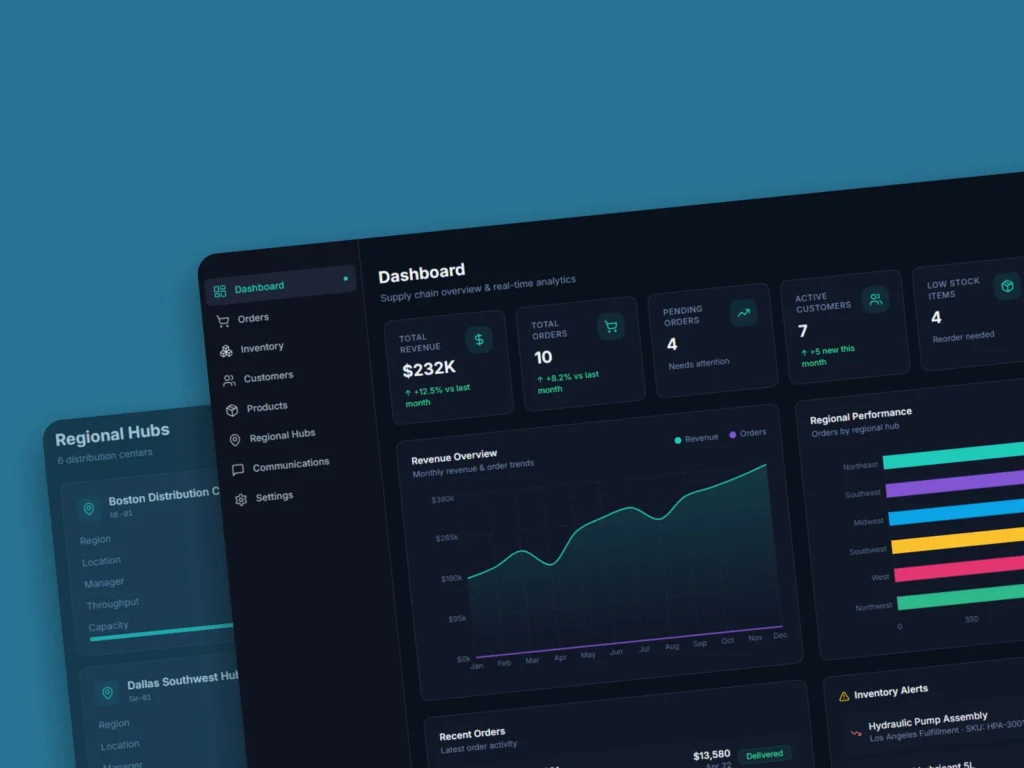
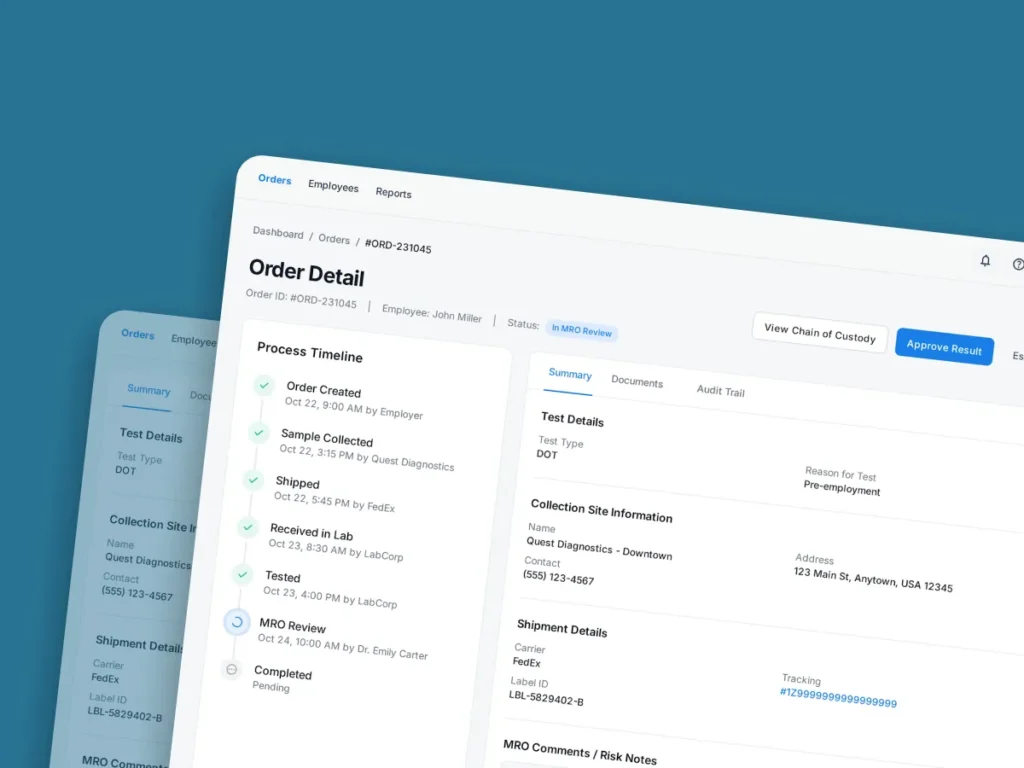
Legacy Platform Modernization for a Drug & Alcohol Testing Provider
A U.S. provider of drug and alcohol testing software needed one platform to replace manual, fragmented workflows for employers, TPAs, and insurers. In an engagement running since 2020, an eight-person CodeIT team refactored the legacy platform into a modular architecture, stabilized integrations with laboratories, an MRO system, and FedEx, and built DOT and forensic custody workflows.
The results
- Less manual data entry and paperwork for collectors, administrators, and employers
- Faster turnaround through real-time status updates and automated result delivery
- Auditable, regulation-ready custody workflows for DOT and forensic testing
- Higher platform adoption through a unified Straight-to-Lab service
Running a similar inherited system? Let’s talk about the right starting point
Business First
Code Next
Let’s talk
FAQ
Legacy modernization, also called legacy software modernization, updates, restructures, migrates, or replaces outdated business software so it can keep supporting the business. It ranges from stabilizing and refactoring an existing application to rebuilding components or moving to a new platform. It does not always mean a full rewrite.
Typical reasons are growing maintenance costs, slow and risky releases, unsupported platforms, fragile integrations, and critical knowledge held by a few specialists. Modernizing in phases reduces these risks while the business keeps running.
Phased modernization reduces disruption by introducing changes incrementally. Where technically feasible, existing and new components run in parallel during migration. Other systems need staged cutovers or planned maintenance windows. The approach depends on architecture, dependencies, and data migration requirements.
We begin with technical discovery, codebase analysis, mapping of integrations and data flows, stakeholder interviews, and business process mapping, to identify critical business rules and dependencies before changing anything that could affect production.
Not always. Refactoring works when existing functionality remains valuable and the code can be improved. Rebuilding may be justified when architectural limits prevent necessary changes. The decision depends on business priorities, technical constraints, costs, and migration risk.
We examine application architecture, data architecture and data flows, integrations, and business workflows. This shows which components can change independently, which need coordinated migration, and what could affect daily operations.
We prioritize by business impact, operational risk, technical dependencies, and feasibility. Critical stability issues may need immediate attention; other components follow a phased roadmap.
Cost and timeline depend on application complexity, technical debt, documentation, integrations, data migration, and the chosen approach. We define the initial scope and provide an estimate based on the work required.
Yes. CodeIT can assess the existing architecture, identify technical risks, and recommend modernization options as a standalone engagement. If implementation follows, our engineering teams can deliver the agreed changes.
Look for experience with inherited applications, undocumented dependencies, phased implementation, and production delivery. Ask how the team will protect critical functionality, manage migration risk, validate releases, and recover if changes fail. Review comparable projects with measurable outcomes, not only technology expertise or roadmaps.
Related engineering services
Software Architecture Consulting
Architectural risks, dependencies, and modernization priorities.
Software Audit Services
Code quality, maintainability, and technical risk before major changes.
API Development & Integration
Modern interfaces and data exchange across legacy and current systems.
DevOps
Release predictability and infrastructure reliability.
Quality Assurance
Automated testing and release validation to reduce regression risk.
CRM Modernization & Integration
Dynamics 365 CRM upgrades and ERP integration without a full replacement.