
AI Strategy Consulting
Most enterprise pilots stall before production. Get a ranked, funded roadmap built around the data, teams, and controls you already have.



Business First
Code Next
Let’s talk
Your AI backlog is not the problem. Sequencing it is
AI strategy consulting starts with the decisions already in front of you. Which use cases justify budget. Which ones your data can actually support. Which ones your compliance team will stop in review.
AI consulting for enterprises breaks at the same seam most times: the distance between a promising pilot and a system your operations team runs daily. You get a ranked portfolio, a business case per initiative, and named owners.
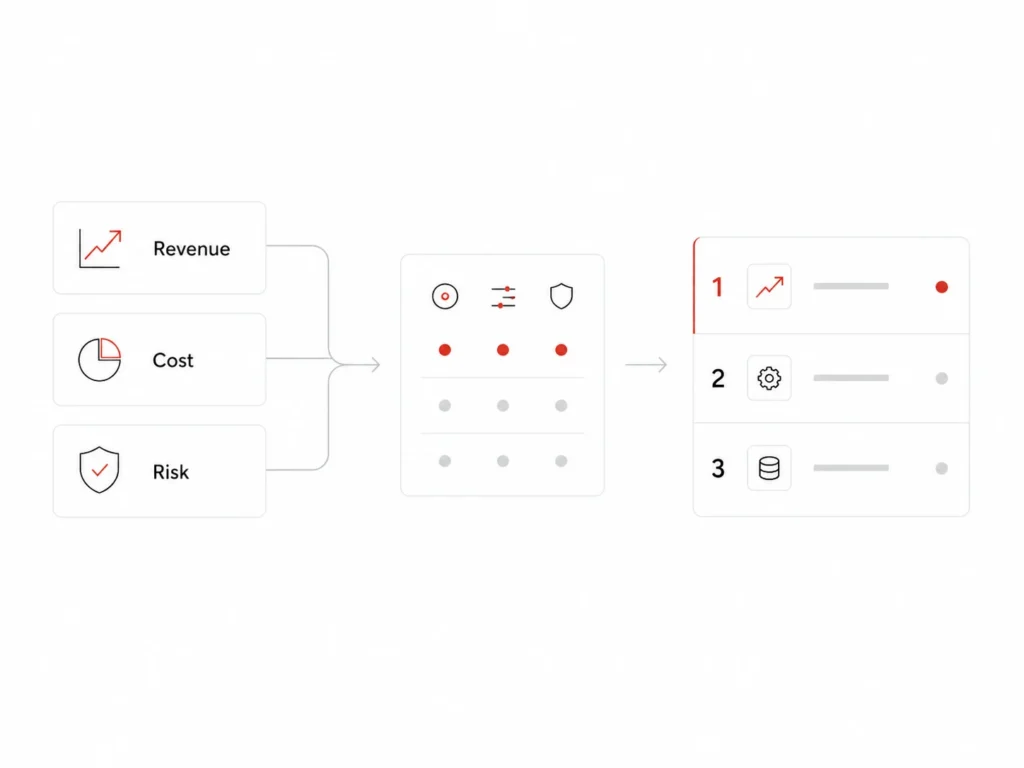
AI consulting services, scoped to one decision at a time.
AI consulting services here are sold as separate scopes. Start with the one blocking your next decision, or combine several into one engagement.
Every candidate use case gets a value estimate, a feasibility read, and a time-to-value range. Ranked side by side, so budget goes to the three that clear the bar rather than the twelve on the wish list.
An honest read on whether your pipelines, access controls, and architecture support the use cases you want. Gaps come back as fixes with effort estimates, not as a maturity score. For the structured diagnostic version, see the AI Readiness Assessment. Where the gaps are structural, our software architecture consulting goes deeper on system design and integration.
Regulatory limits are mapped before scoping, not after legal review. Where model access, logging, or data residency is in question, AI Governance & Compliance Consulting covers it in depth. An LLM security audit and a secure AI usage audit sit alongside it.
A vendor-neutral comparison for each shortlisted use case: what a platform covers, what needs custom work, and what switching costs look like in two years. No reseller quota sits behind the recommendation.
Where language models are in play, scoping covers evaluation criteria, data boundaries, and fallback behaviour. Deeper work on model selection and prompt architecture sits with Generative AI & LLM Consulting.
Your leadership team gets one view of what is funded, what is paused, and why. Most AI consulting services stop at the deck; this one continues into the first funding cycle through AI Advisory Services.

Get a ranked AI roadmap your CFO can fund.
Business First
Code Next
Let’s talk
Artificial Intelligence consulting
What you get.
Opportunity Portfolio
Artificial intelligence consulting starts here: every use case scored on value, feasibility, and time to value, then ranked.
- Scored use-case register
- Effort and cost estimates
- Fund, park or stop calls
Business Case Per Initiative
Each funded initiative carries its own numbers: a baseline, a target, the measurement method behind both, and an accountable owner.
- Baseline and target metrics
- Cost and payback window
- Named business owner
Data Reality Check
A plain read of the pipelines, access rules, and quality gaps standing between your data and the use cases you picked, with fixes sized.
- Source system inventory
- Quality and access gaps
- Fix list with estimates
Target Operating Model
Who decides, who builds, who reviews. Written down before delivery starts, so ownership is not renegotiated mid-quarter.
- Decision rights mapped
- Build vs partner split
- Review and escalation path
Control Framework
The guardrails your legal and security reviewers will ask for, mapped to the regulations that apply in your sector and written down.
- Approved tooling list
- Data handling boundaries
- Audit and logging rules
Phased Roadmap
Initiatives sequenced by dependency and capacity: the part of artificial intelligence consulting that survives delivery.
- Quarter-by-quarter plan
- Dependency and risk map
- Go / no-go checkpoints
AI transformation consulting after the first attempt
Most companies asking for AI transformation consulting have already run a pilot that went nowhere. The six areas below assume that history rather than a blank slate, and each one answers a common reason programs stall.

Pilots That Reach Production
Every initiative gets a production owner and a named integration path before it is funded, so the pilot has somewhere to land.

Sequencing Tied To Capacity
The roadmap is built against the team you have, not an ideal one. Phases move when hiring, platform work, or approvals move.

Budget Defended In Review
Each initiative arrives with a baseline, a target, and a measurement method your finance team can check without your help.

Legacy Systems Priced In
Integration debt is priced into the plan. AI transformation consulting that ignores your ERP or CRM produces a schedule nobody can hit.

Adoption Past The Pilot Team
Training, process changes, and incentives are scoped alongside the build, because unused tools fail the same way broken ones do, only more quietly.

Decisions To Stop Work
Go / no-go checkpoints are set in advance, each with the evidence it needs, so stalled initiatives get closed rather than quietly refunded.
How to check an AI consulting company
Seven questions worth asking every firm on your shortlist, this one included. Each answer is verifiable before you sign.
Delivery Track Record
Ask who builds what they recommend. Advice from a firm that has never shipped the thing tends to underestimate integration work.
Vendor Neutrality
Ask which platform partnerships pay commission. An AI consulting company carrying a reseller quota has a reason to reach one answer.
Named Accountability
Ask who signs the recommendation. Named people, not a practice, and confirm those names stay on the engagement past kickoff.
Security Posture
Ask for the certification, the approved-tool list, and the training-data policy in writing. CodeIT holds ISO 27001 certification.
Data Handling Terms
Ask whether your code and documents can train external models. The answer should be no by default, and it belongs in the contract, not a policy page.
IP And Exit Terms
Ask who owns the deliverables and what happens if the engagement ends early. 100% IP ownership should be the standard, not an upgrade.
Willingness To Say No
Ask for a case where the advice was to stop. An AI consulting company that has never advised against AI is selling, not advising.
How an engagement runs
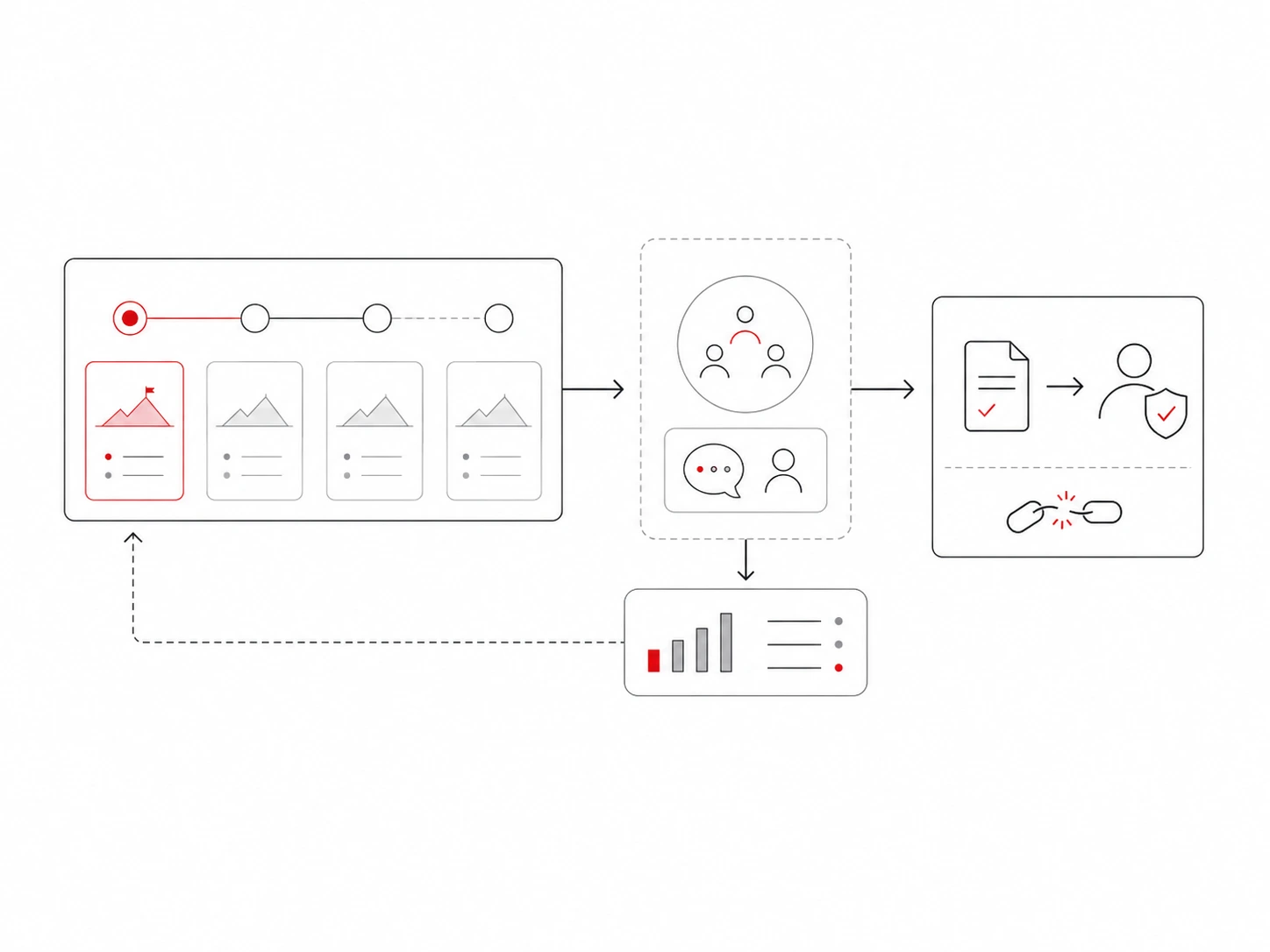
Four phases. Every AI strategy consulting engagement runs the same sequence, scaled to the number of systems in scope.
First Call
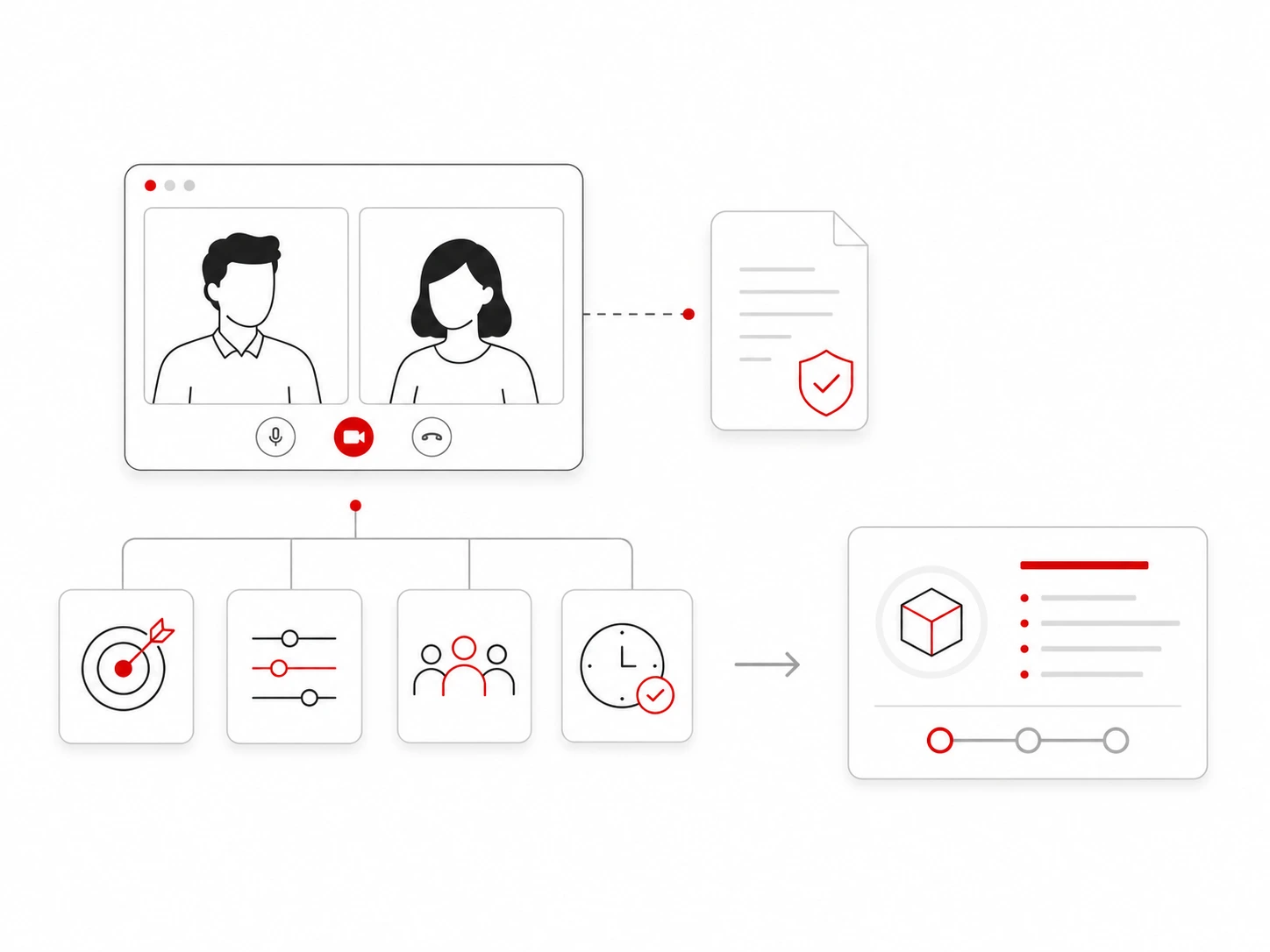
A scoping call before anything is signed.
Goals, constraints, and the decision you are trying to make. A mutual NDA is signed before any sensitive detail changes hands.
- An outside read on whether the work is worth doing at all, said plainly
- Who the decision-makers are and what success looks like for them
Discovery & Analysis
Systems, data, and capacity get reviewed.
Interviews across business and engineering, plus a look at the pipelines, controls, and integrations the use cases would depend on.
- Compliance constraints and dependencies flagged before scoping, not afte
- Current capabilities mapped against the use cases under consideration
Roadmap & Validation
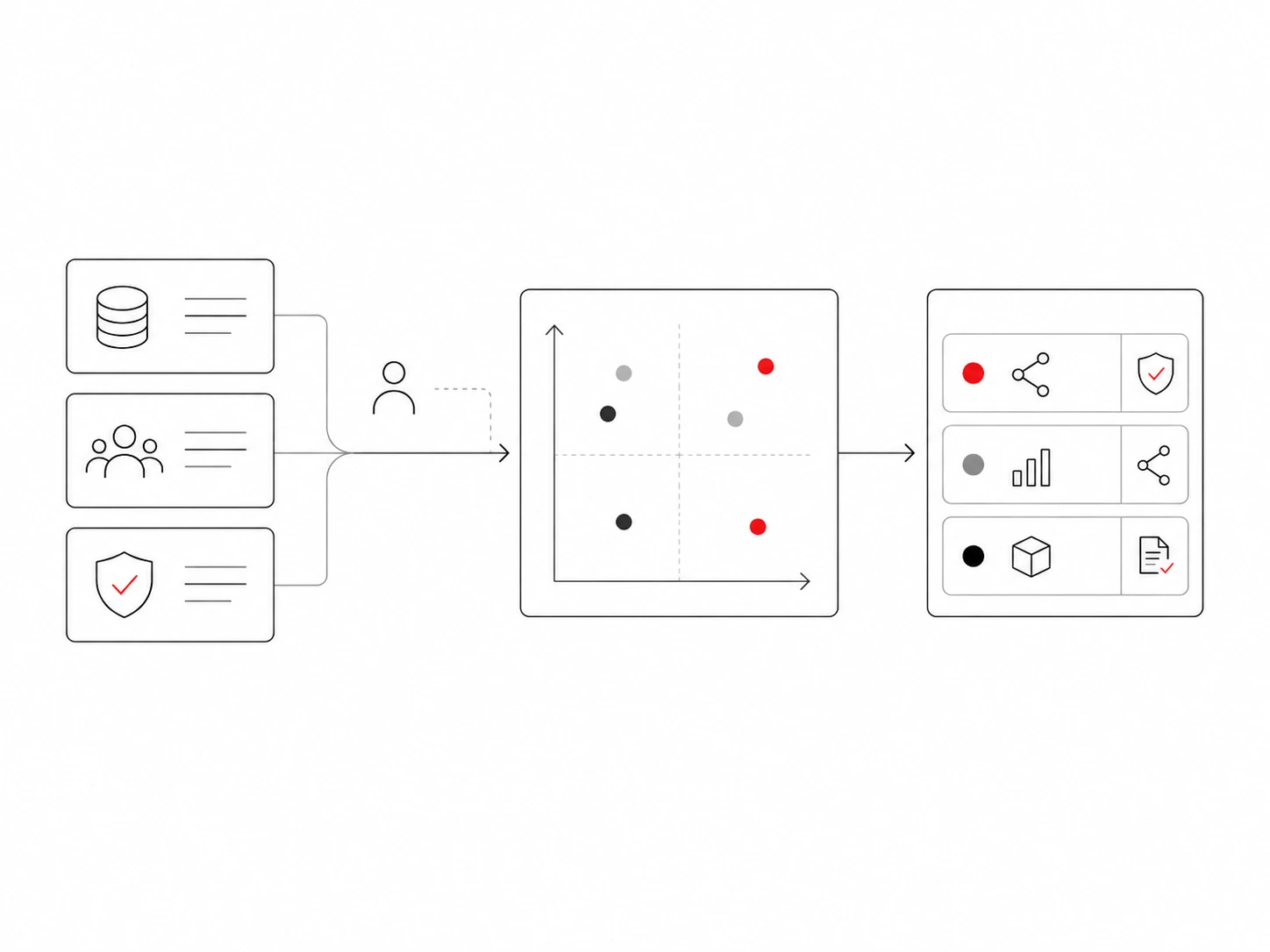
A phased plan with owners and business cases.
Priorities are checked against your budget, risk appetite, and delivery capacity before the roadmap is finalized.
- Each initiative carries a business case, success metrics, and a baseline
- Governance and operating model documented so the plan survives handoffs
Enablement & Advisory
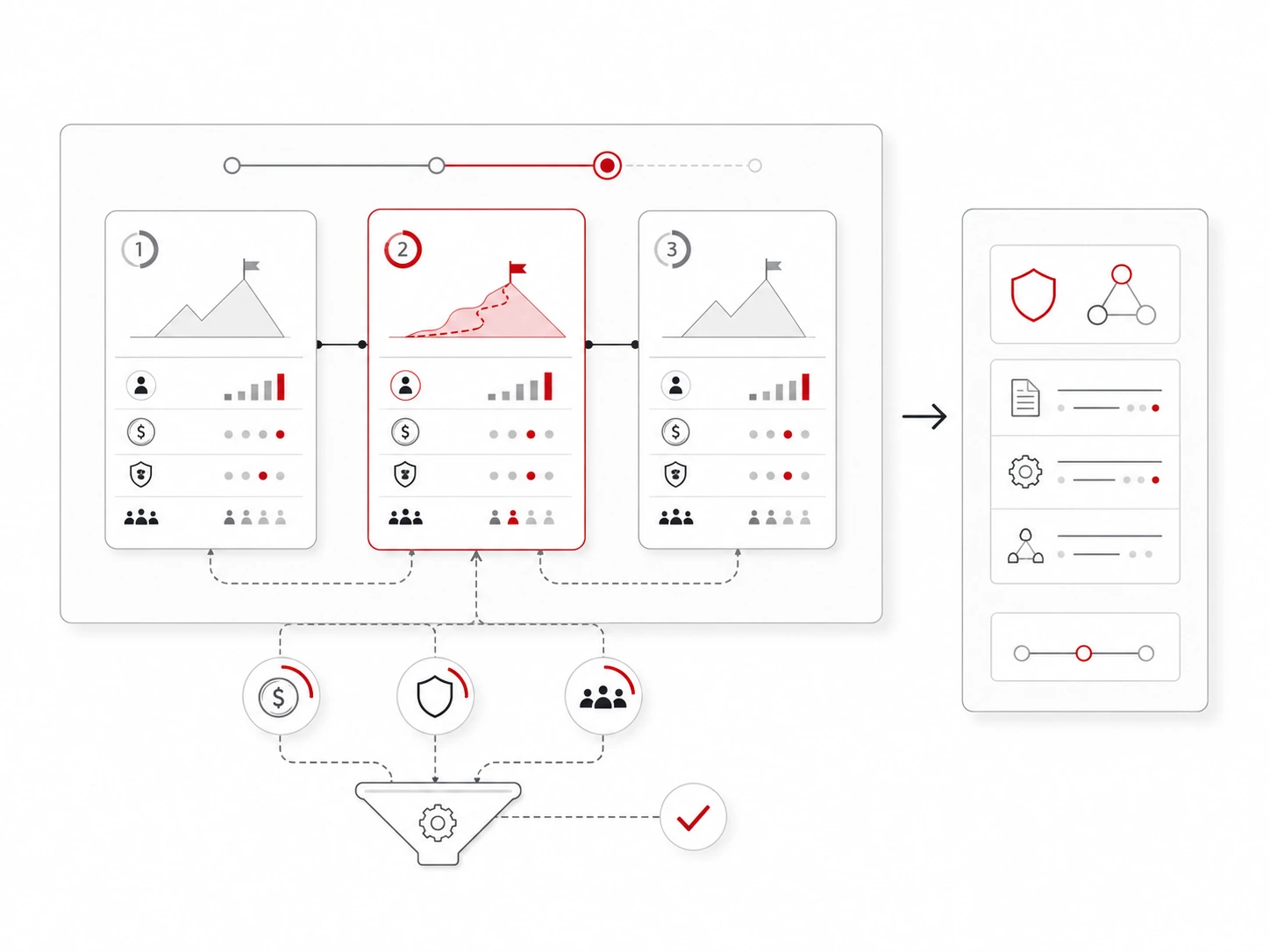
Support through the first phase of delivery.
Internal owners are coached so capability stays in-house, and the roadmap is recalibrated as the first results arrive.
- 100% IP ownership of deliverables transfers to you, under US governing law
- Ongoing review available as priorities and technology shift
Start with the call that decides if this is worth doing
Business First
Code Next
Let’s talk
Where to go deeper on AI strategy
Readiness Assessment
A structured diagnostic of data, platform, and team readiness, run before a roadmap is built. Start here if the gaps are unknown.
Ongoing AI Advisory
Ongoing lead-level guidance after the roadmap lands: reviewing progress, evaluating new opportunities, keeping priorities current.
AI Prototype & PoC Development
A time-boxed build that tests one use case against real data before it enters the roadmap as a funded initiative.
Generative AI & LLM Consulting
Model selection, evaluation, and prompt architecture for the language-model use cases that reached your funded list.
AI-Powered Engineering
Delivery capacity for the initiatives on the roadmap, from data pipelines through to production model deployment.
AI Governance & Compliance
Policies, controls, and audit trails for AI systems in regulated environments, including LLM security and usage audits.
AI strategy consulting in practice
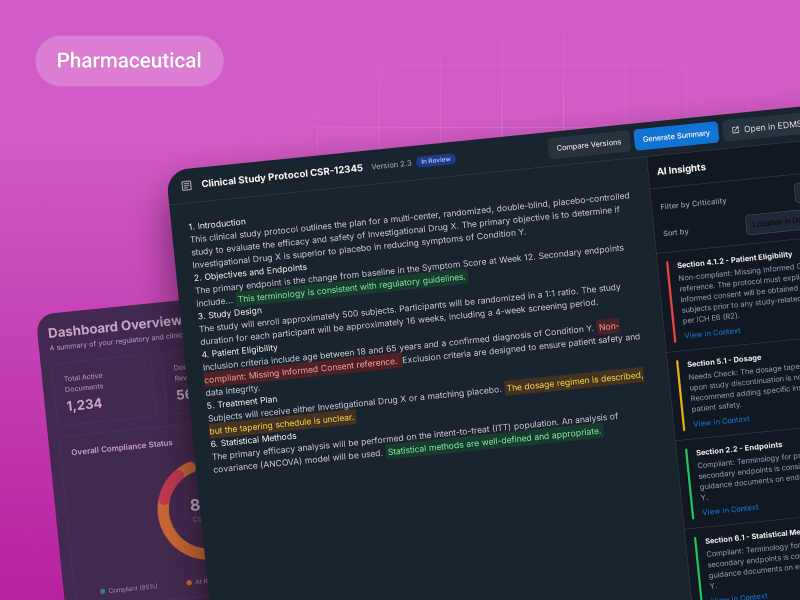
AI for regulatory & clinical documentation
A pharmaceutical company preparing FDA/EMA submissions under strict data-privacy laws that ruled out cloud AI.
Challenge: Teams lost up to 40% of working time to manual document search and compliance checks, and errors in clinical-trial data delayed regulatory submissions.
What we did: We built a self-hosted custom AI assistant with semantic search and automated compliance validation, integrated into EDMS/QMS/RIMS, with multi-language support and real-time regulatory updates.
Outcome: 45% faster submission preparation, 70% less time spent on document search, and zero compliance errors during audit.
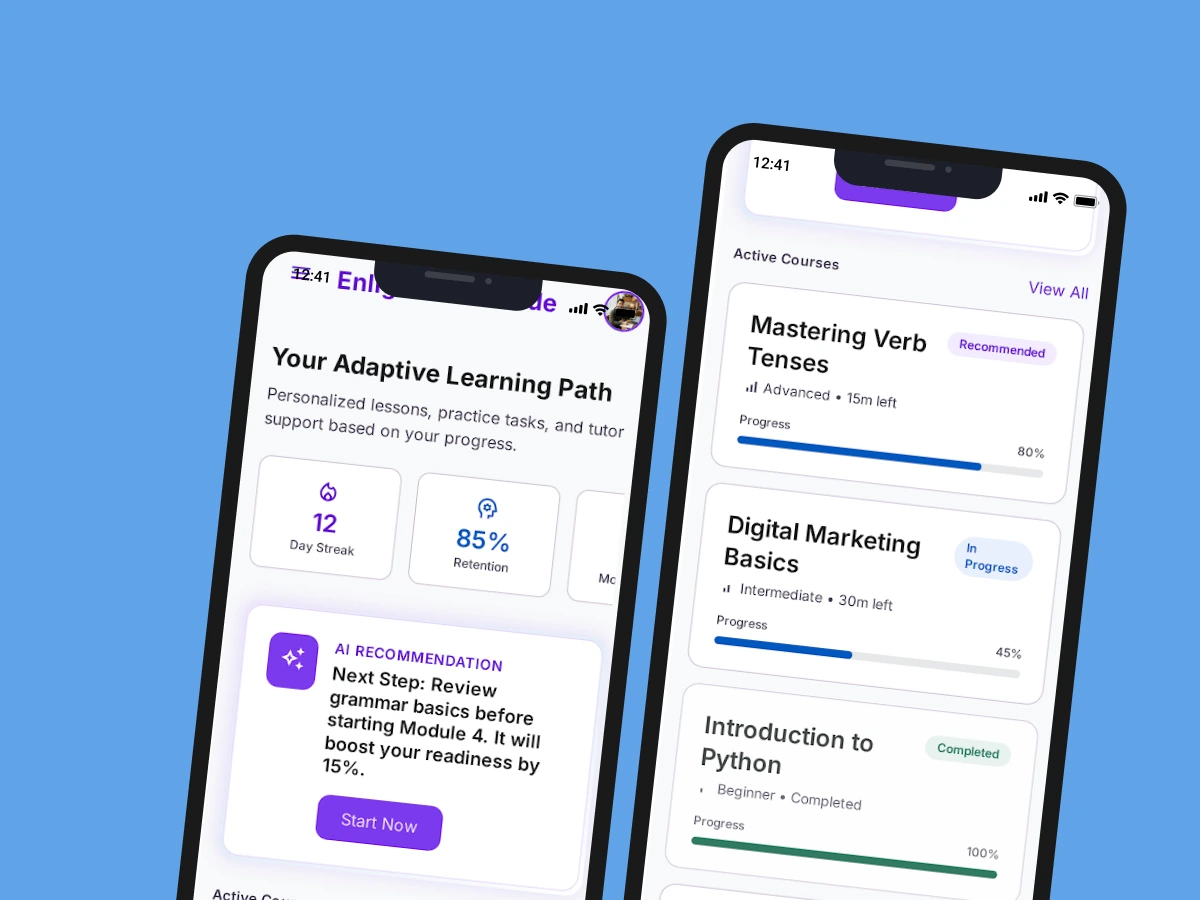
AI-driven learning modernization
A Europe-based online education provider serving 13,000+ students
Challenge: A one-size-fits-all experience with no personalization, tutors stretched thin by repetitive work, and content production too slow for demand.
What we did: We mapped where AI could add the most value, then built an integrated ecosystem: an on-demand assistant for practice content and an adaptive AI tutor giving tailored explanations via chat or voice.
Outcome: 148 new modules in under a year — against 100 in the prior 12 — with higher engagement and retention, restoring the platform’s competitive edge.
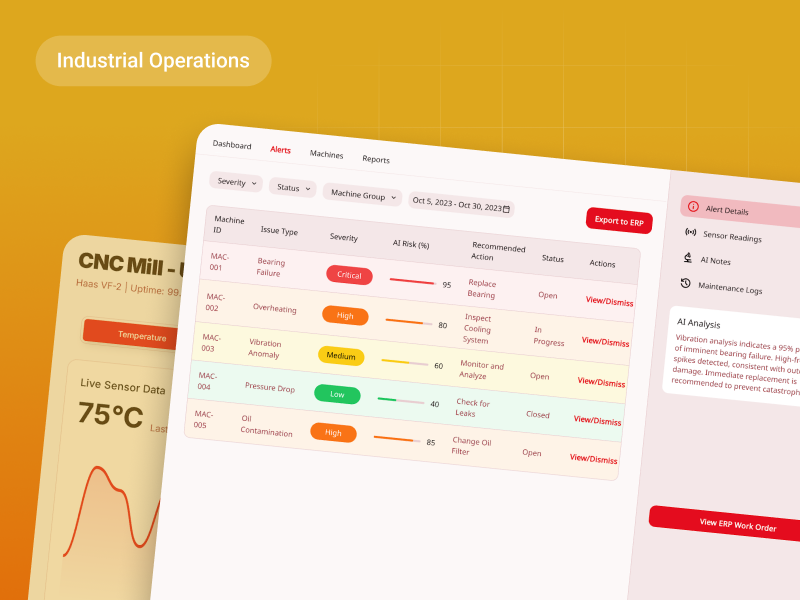
Predictive maintenance integration
A manufacturing company running production against tight order deadlines.
Challenge: Unexpected machinery failures caused expensive downtime and delayed orders.
What we did: We delivered a custom AI software development project integrating IoT sensor data into a predictive maintenance system, with automated alerts inside the company’s ERP
Outcome: 25% reduction in unplanned downtime, maintenance-cost savings of $150k/year, and ROI achieved in 5 months.
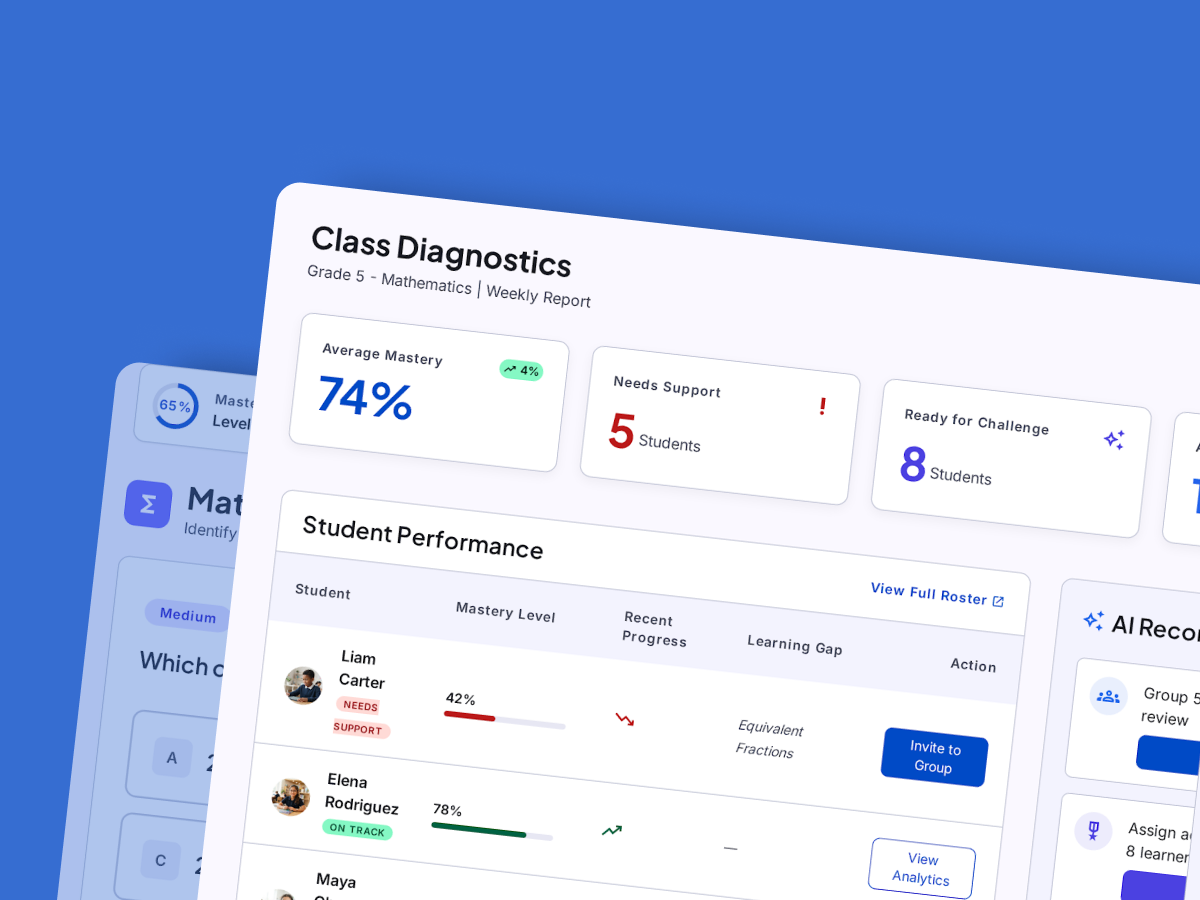
AI-personalized learning platform
A UK-based EdTech platform serving primary and secondary schools
Challenge: Single-pace classrooms couldn’t stretch strong learners or support struggling ones, and collected data wasn’t turning into action.
What we did: We prioritized the highest-ROI use cases and added an AI engine for adaptive practice, real-time diagnostics, and teacher recommendations — sequenced so early results would justify wider rollout.
Outcome: Independent studies reported 20% higher test scores and 30% faster mastery, with teacher workload down. The clear ROI funded expansion from 50 to 150 schools.
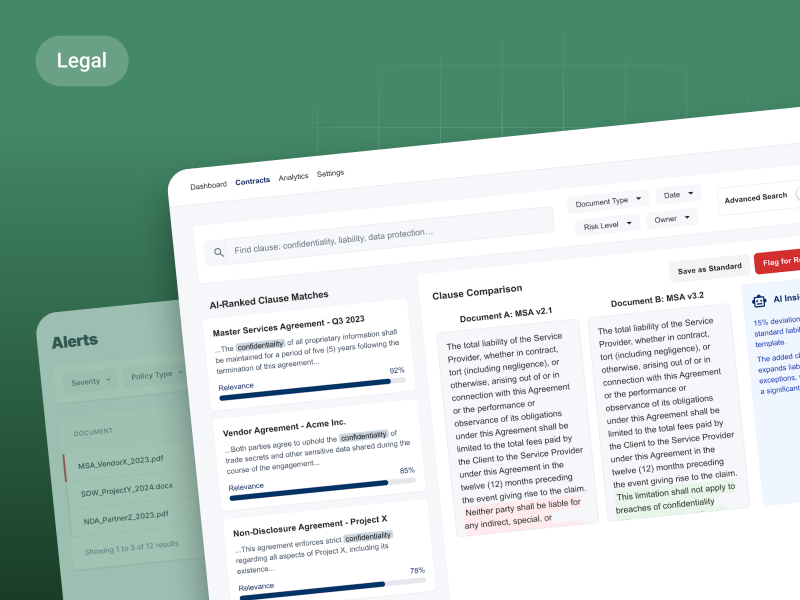
AI for contract & compliance management
A legal department managing thousands of contracts and compliance documents.
Challenge: Searching clauses by hand took days, slowing deal cycles and raising the risk of missing critical legal changes.
What we did: We delivered a self-hosted custom AI assistant with semantic search, clause comparison, and automated compliance alerts, integrated into the client’s DMS
Outcome: 65% faster contract review, 50% less time spent on compliance research, and improved accuracy in regulatory-risk detection.
FAQ
A ranked portfolio of use cases, a business case for each funded initiative, and a data and platform readiness view. Plus a target operating model and a phased roadmap with named owners. CodeIT delivers these as working documents teams act on, not as a slide deck.
With the reason it failed. Stalled pilots usually trace back to data that could not support the use case, no production owner, or a business case nobody could measure. CodeIT reviews the previous attempt before proposing new work, because the same constraint tends to block the next one.
No. A first scope is usually one decision, such as whether a single use case is worth funding, rather than a full transformation program. Early work is deliberately small enough that its result can still change the plan.
No. AI tools used on CodeIT engagements run with training disabled and sensitive artifacts excluded, inside an ISO 27001-certified information security management system. Client code, documents, and strategy do not train external models.
That is a valid outcome and it gets said directly. Some processes are too unstable, too low-volume, or too poorly instrumented for AI to pay back. The recommendation then names what comes first, which is often data quality or process design rather than a model.
The client does. 100% IP ownership of all deliverables transfers under US governing law, with no vendor lock-in. Nothing in the roadmap depends on a platform CodeIT resells, because CodeIT does not resell AI platforms.
Business First
Code Next
Let’s talk
Bring the AI initiative that stalled. Start there.