
AI PoC Development Services
Validate impact fast and turn your AI idea into a functional prototype in 4-6 weeks. Our AI PoC development services help you verify feasibility, measure real-world performance, and confirm business value before investing in full-scale deployment.
Business First
Code Next
Let’s talk
- 4–6 week ROI validation
- Real-workflow testing
- Controlled investment risk
- Working prototype output
- Data-backed results
- Evidence before scaling
Service overview
From concept to functional prototype — fast, secure, and business-ready
Fast-track service to validate AI ideas before full-scale implementation. This engagement is designed to help organizations prove whether their AI initiative can work in practice and deliver measurable results.
We focus on designing and building a testable solution (functional prototypes or proof-of-concepts) using real client data to evaluate technical readiness, real-world performance, business impact, and scalability.
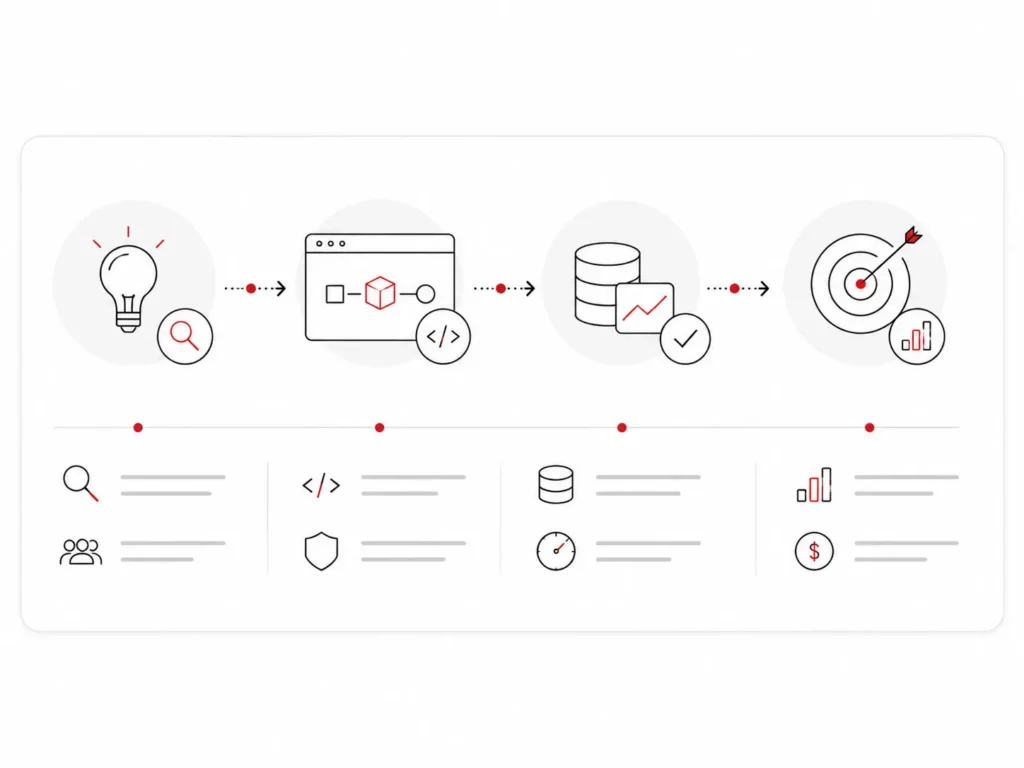
Strategic pillars of our AI PoC development services
Rapid ROI Validation
Confirm your AI initiative’s potential within 4–6 weeks. See measurable value and performance benchmarks before major investment.
Controlled Risk & Cost Efficiency
De-risk innovation by identifying technical feasibility, data gaps, and integration constraints early — before full rollout.
Executive Alignment & Stakeholder Confidence
A tangible prototype helps leadership teams and investors visualize success, driving faster internal buy-in and funding approval.
Actionable Insights for Full-Scale AI Implementation
Gain a clear blueprint for scaling — including architecture recommendations, data preparation needs, and a roadmap to production-grade AI.
Accelerated Time-to-Market
Validated PoCs shorten the journey to MVP or full deployment, turning AI exploration into a competitive operational advantage.
What an AI PoC proves, and what it does not
An AI PoC is a narrow technical test with a pass or fail answer. Six things it settles, and the ones it deliberately leaves open.
Whether the model performs on your data rather than on a benchmark set. The sample is small on purpose, but it is yours, with its gaps and inconsistencies left intact.
The measured quality against a threshold agreed before the build. An AI PoC that reports accuracy without a pre-agreed bar has proved nothing you can act on.
Whether the systems the use case depends on can be reached, at the latency the workflow needs. More builds fail here than on model quality alone, and it rarely shows up in a demo.
Scale, cost at volume, and user adoption stay open. Those need real users, and pretending otherwise is how a strong demo becomes a stalled AI pilot project.
Whether the data can legally move where the architecture wants it to. Constraints get checked during the build, not discovered in a security review afterwards.
A failed AI PoC costs weeks. A failed production rollout costs quarters and credibility. The point is to fail cheaply, on purpose, inside a controlled scope.
Deliverables that drive decisions

Working AI Prototype
A functional, testable model or application built from your data and use case.This process involves applying relevant AI and ML services, models, and necessary integrations.

Executive Summary & Roadmap
A concise business report outlining results, impact, expected ROI, feasibility signals, risks, and a recommended path to production.

Technical Documentation and Code Delivery
The full source code, architecture details, usage guidelines, and deployment instructions.
AI proof of concept: success criteria
Agreed before build
The Success Metric
An AI proof of concept needs one primary measure, chosen with you, with the threshold written down before any code is committed.
- One primary metric only
- Threshold agreed up front
- Measured on held-out data
The Data Sample
A defined sample from your systems with the messy records left in, because clean sample data is how a test passes and production fails.
- Fixed sample, agreed scope
- Known edge cases included
- Held-out set reserved
The Latency Budget
How fast the answer has to come back for the workflow to be usable, tested under conditions close to the real ones.
- Target response time
- Tested under realistic load
- Failure mode defined
The Failing Case
What result would mean stop. An AI proof of concept without an agreed failing case is a demonstration built to succeed.
- Explicit stop threshold
- Who makes the stop call
- No renegotiation midway
The Cost Signal
A rough read on what the use case would cost at volume, based on token, compute, and integration measurements from the build.
- Cost per transaction
- Projected volume cost
- Main cost driver named
The Written Verdict
AI PoC development services should end in writing: what was proved, what was not, and the recommendation, including a stop.
- Result against each metric
- Recommendation with reasons
- What a next phase needs
How AI proof of concept development services run
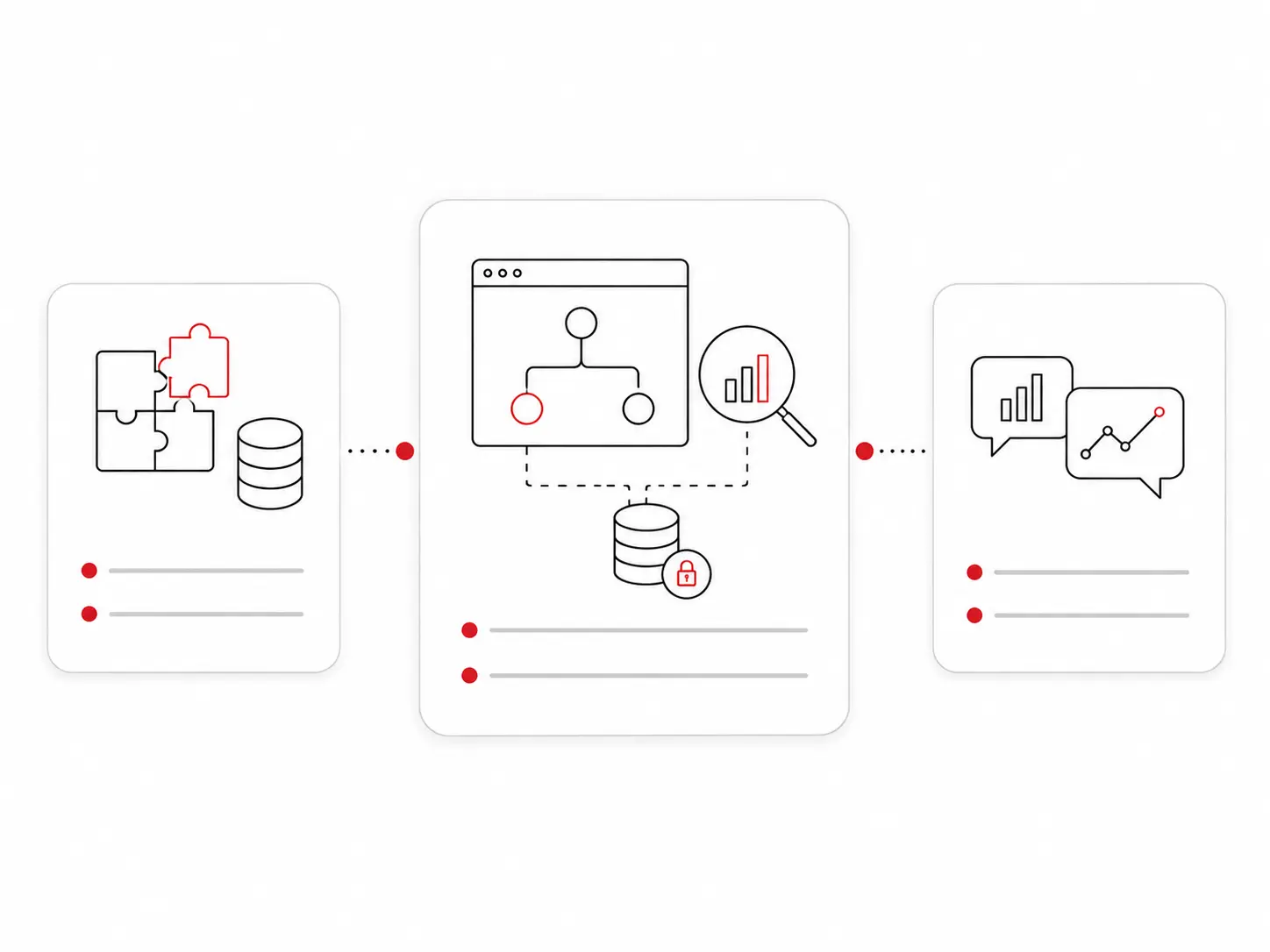
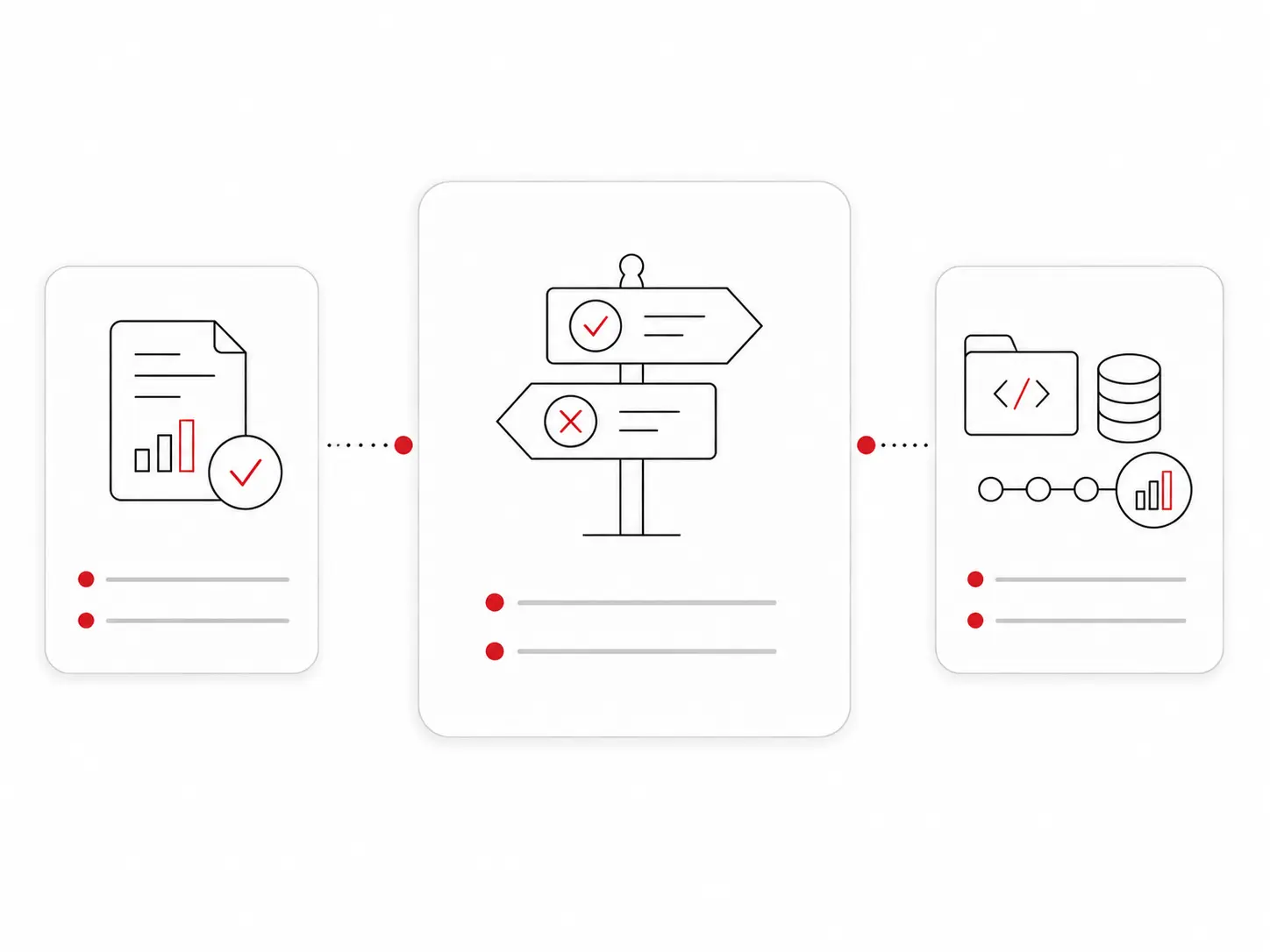
Four phases inside the 4-6 week window. Each one ends with something you can review, so nothing accumulates behind a closed door.
Agreeing the question and the bar.
One use case, one dataset, one success metric with a threshold. Anything outside that is written down as out of scope and stays there.
- Data access is agreed with whoever owns the systems, in writing
- The success metric and its threshold are signed off before work starts
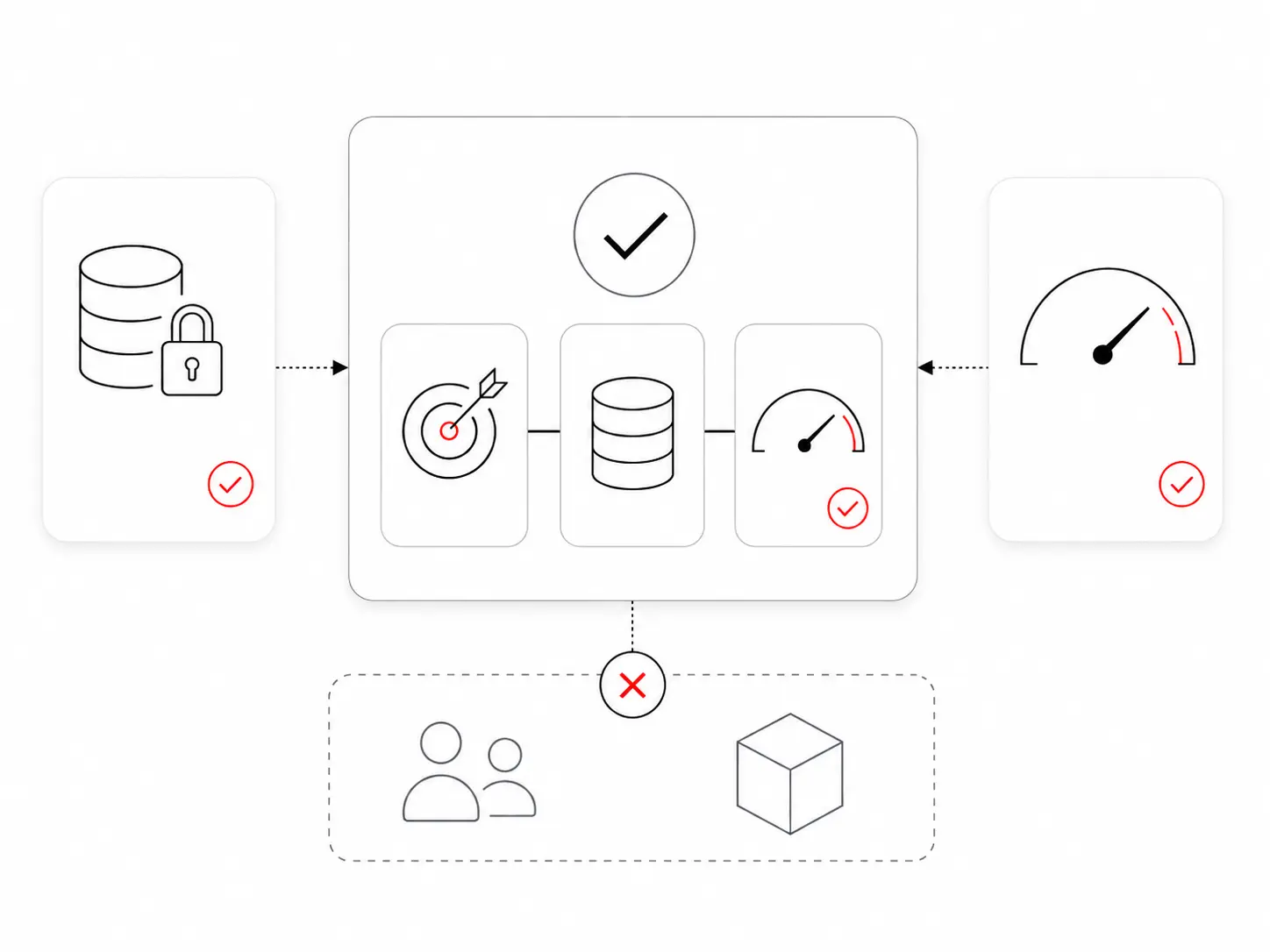
Getting a realistic sample in place
The sample is pulled, checked, and kept representative rather than cleaned into something that flatters the result.
- Known gaps and edge cases stay in the sample deliberately
- A held-out set is reserved before any tuning begins
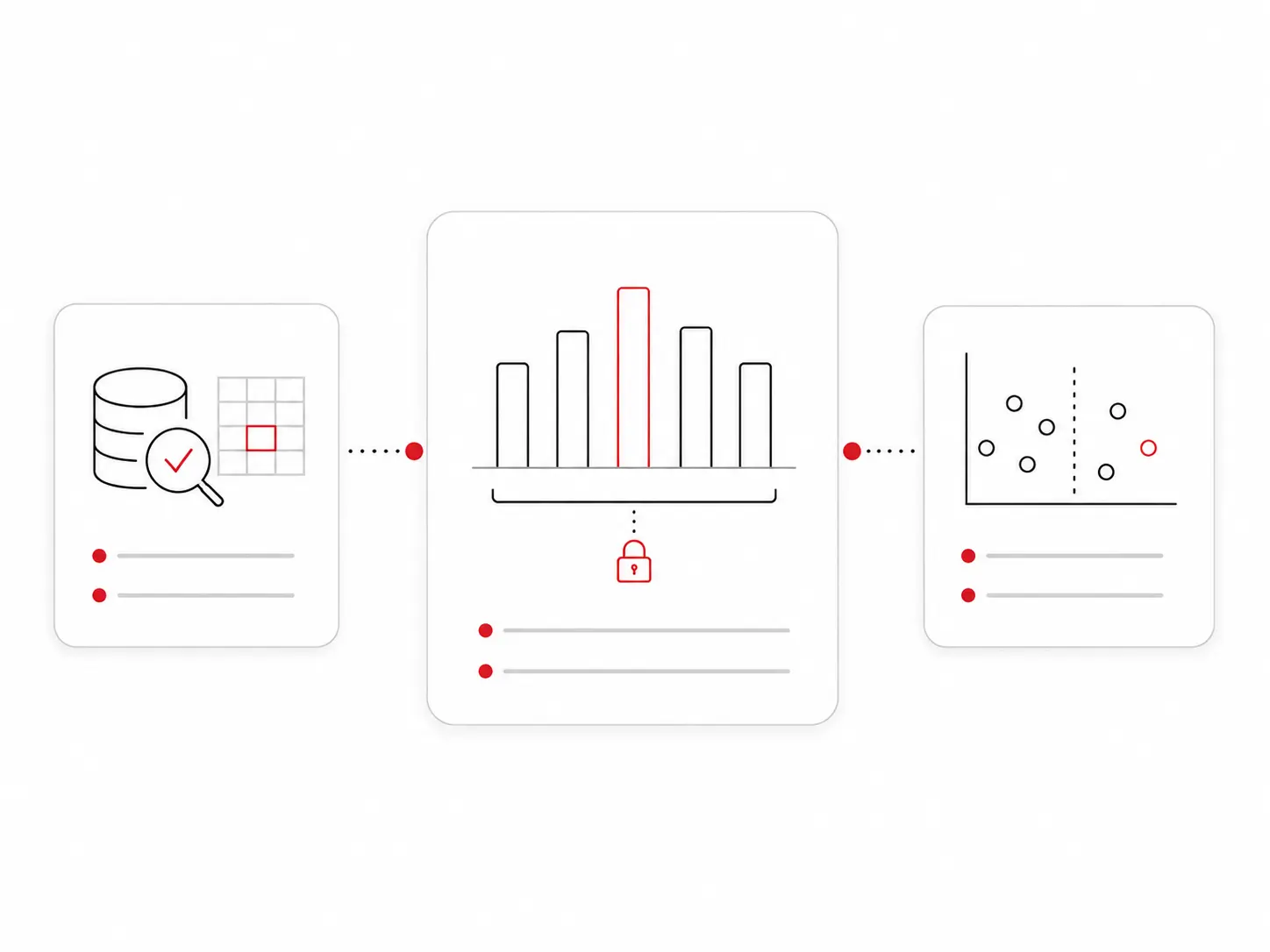
Building the narrowest thing that answers it
Model, retrieval, and integration work only as far as the question requires. Measurements are taken against the held-out set, never the training data.
- Approaches that fail early are reported rather than quietly replaced
- Interim results are shared as they come, not saved for the end
Reporting what it proved and what follows
The written result against the agreed metric, plus a recommendation and the scope of a production phase if the answer is yes.
- Code, data pipeline, and measurements transfer to you either way
- A stop recommendation is delivered as plainly as a go
Why C-level leaders choose CodeIt
Our Differentiated Methodology for AI Validation
Fast Proof of Value
Move from idea to a working AI prototype in weeks, not months — achieving a go/no-go decision with real evidence.
Business-First AI Expertise
Every prototype aligns with your goals — cost optimization, efficiency, or revenue growth — across NLP, computer vision, predictive analytics, or generative AI.
Collaborative & Transparent Process
Work directly with AI engineers and domain experts who translate complex models into measurable impact.
Built for Scalability
Each PoC is developed with a clear path to MVP and enterprise-ready deployment — no single-use experiments.
AI PoC development: what changes the timeline
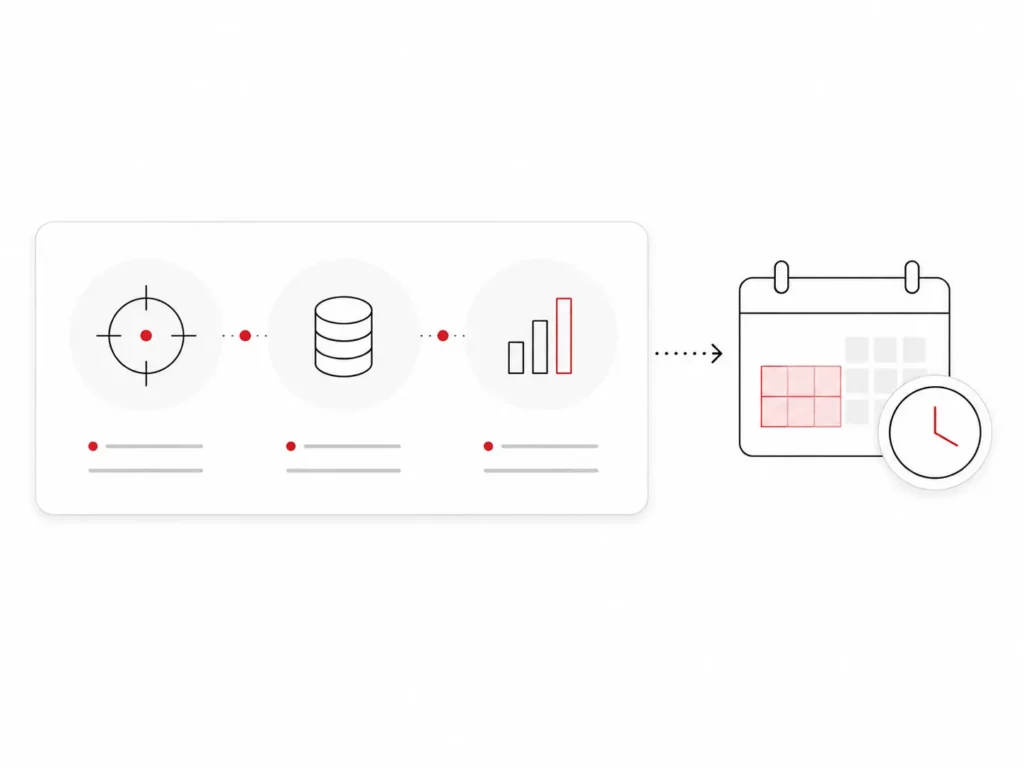
AI PoC development lands in 4-6 weeks because the scope is fixed at one use case, one dataset, and one success metric. Anything added mid-engagement moves the end date rather than being absorbed quietly.
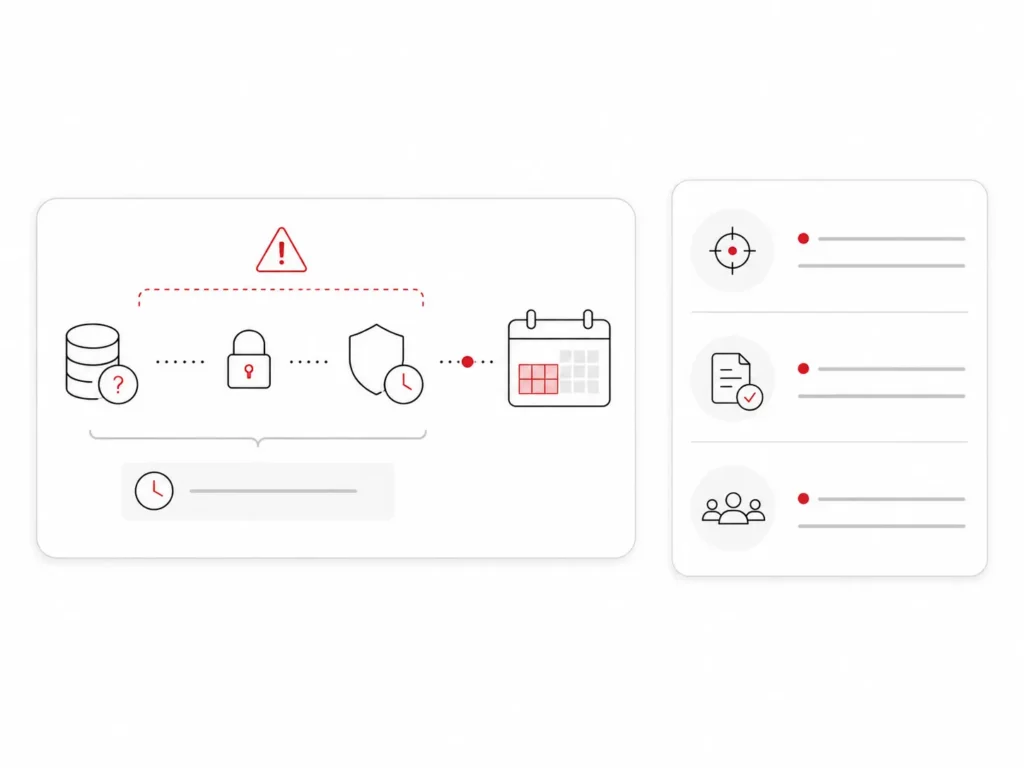
What stretches that window is data access, not model choice. Waiting on a security review or a missing export costs more days than any engineering decision in the build.
Where the data question is still open, an AI Readiness Assessment comes first
- Fixed scope – one use case, one dataset, one agreed success metric
- Data access agreed in week one, not discovered in week three
- An AI pilot program with real users is a separate phase, scoped after the verdict
Before and after
a PoC
The engagements that usually sit on either side of AI PoC development services.
AI Strategy Consulting
The hub engagement: turning a validated use case into a funded, sequenced roadmap with owners and business cases.
Readiness Assessment
A verdict on data, platform, and team readiness when it is not yet clear whether a build would have usable inputs.
Ongoing AI Advisory
Lead-level guidance when the use case is still in question, or when results need interpreting before the next commitment.
Custom AI Development
Full build capacity once the test confirms the use case works, including the move from AI pilot to production.
Generative AI Development
Where a generative AI PoC clears its evaluation set, this covers the production build: retrieval, guardrails, evaluation.
FAQ
A PoC tests technical feasibility and stays internal. AI prototype development produces something clickable that tests the experience and the interface. An MVP is a real product with real users and measurable goals. Vendors quote very different work under the same word, so the deliverable matters more than the label.
Scoping can happen within days of the first call. What sets the real pace is data access. Rapid AI prototyping is only rapid once a sample is available and approved, and that step sits with your security and data owners.
The written verdict, the measurements, the code, and the data pipeline. A negative answer in weeks costs less than a year of AI pilot purgatory, where a build runs on without a decision date. It usually narrows the next question rather than closing it.
Yes. A generative AI proof of concept follows the same rules as any other: one use case, an agreed metric, and a held-out evaluation set. Retrieval quality and error rate are usually the measures that decide it, not fluency.
Ask what happens when the result is negative. A PoC development company that has never delivered a stop recommendation is selling builds rather than tests. Then ask who owns the code and the measurements afterwards. Any AI PoC development services contract should answer that in writing.
Scope expands from one dataset to all of them, and from one metric to monitoring, fallbacks, and retraining. Going from AI PoC to production is a separate engagement with its own estimate, and the test is what makes that estimate reliable.