
AI Advisory Services
Lead-level AI guidance without a full-time hire. Start with a workshop, or keep an advisor in the room as decisions and evidence change.

Business First
Code Next
Let’s talk
Get advice before you decide, not after
AI advisory services work best when the question is live. Which vendor, which sequence, whether to stop a project that is quietly consuming a quarter of your engineering time.
The format flexes: one workshop, a monthly review, or an advisor on call between them. Where a decision needs a full roadmap behind it, that is AI Strategy Consulting. Where it needs a verdict on your data first, that is the AI Readiness Assessment.
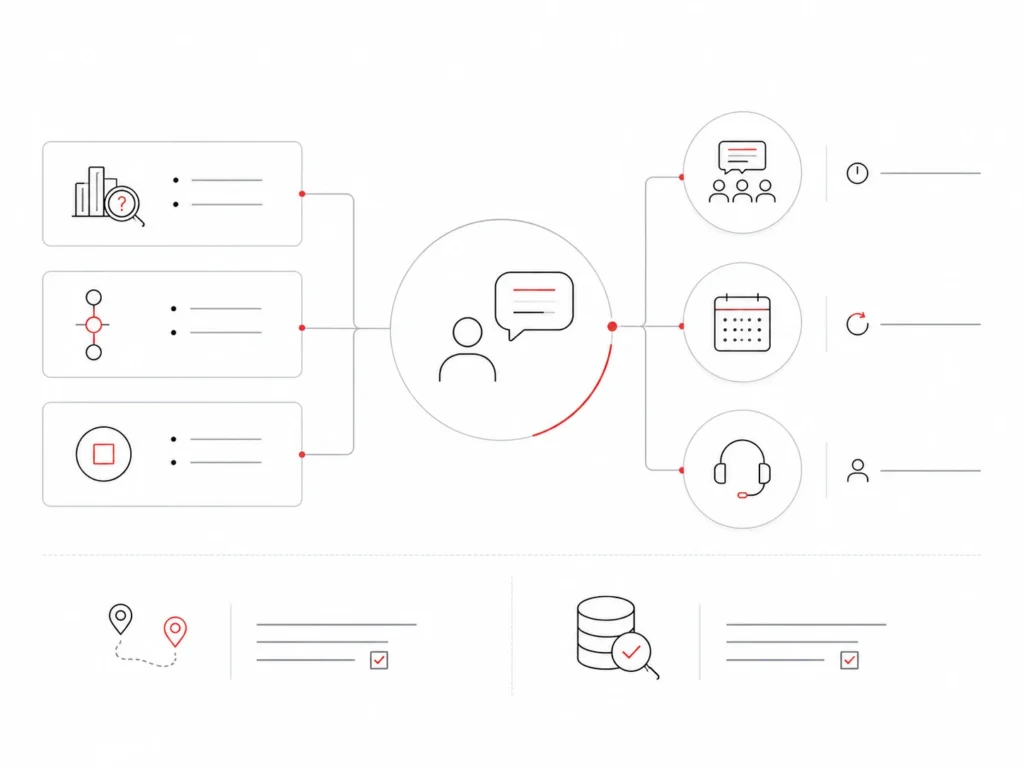
What changes with an advisor in the room
Most of these decisions get made anyway. What AI advisory services change is who is in the room. Someone who has watched the same call go wrong elsewhere, and who has no stake in the answer being yes.

Faster Vendor Decisions
Shortlists get cut on evidence rather than on demos, so procurement starts weeks earlier than it otherwise would.

Fewer Stalled Projects
Work that has stopped paying back gets named and closed, instead of consuming budget until the next planning cycle.

Sequencing That Holds
Dependencies are checked before commitments are made, so the plan survives contact with hiring and platform work.

Second Opinion On Scope
Proposals from vendors and internal teams get reviewed against what the work actually requires to reach production.

Board-Ready Framing
Technical trade-offs get translated into the cost, risk, and timing terms your finance and legal reviewers act on.

Knowledge That Stays
Reasoning is written down as decisions are made, so the next person in the role inherits context, not just conclusions.
AI adoption consulting: the part after procurement
Adoption is where most AI budgets quietly die. AI adoption consulting covers the work between a signed contract and people actually using the thing.
Which teams go first, and why. Starting with the loudest requester is the common mistake. Pick the team whose process is stable and whose manager will enforce the change.
A model dropped into an unchanged process usually adds a step. The work here is deciding what the process looks like afterwards, and what stops being done at all.
Generic prompt training does not transfer. Sessions are built around the three or four tasks each role actually performs, using your own data and examples.
Licence counts tell you nothing. AI adoption consulting sets measures tied to the task: completion time, rework rate, and the share of output accepted without editing.
What happens when the output is wrong, who fixes it, and how a user reports it without opening a ticket nobody reads. Defined before rollout, not after the first complaint.
Middle managers decide whether adoption sticks. They get the reasoning, the measures, and the authority to change targets, or the rollout stops at their layer.

Get a second opinion before the next commitment

Business First
Code Next
Let’s talk
The AI discovery workshop, agenda included
For teams who need a map before a plan. An AI discovery workshop turns scattered ideas into a shortlist with reasons attached.
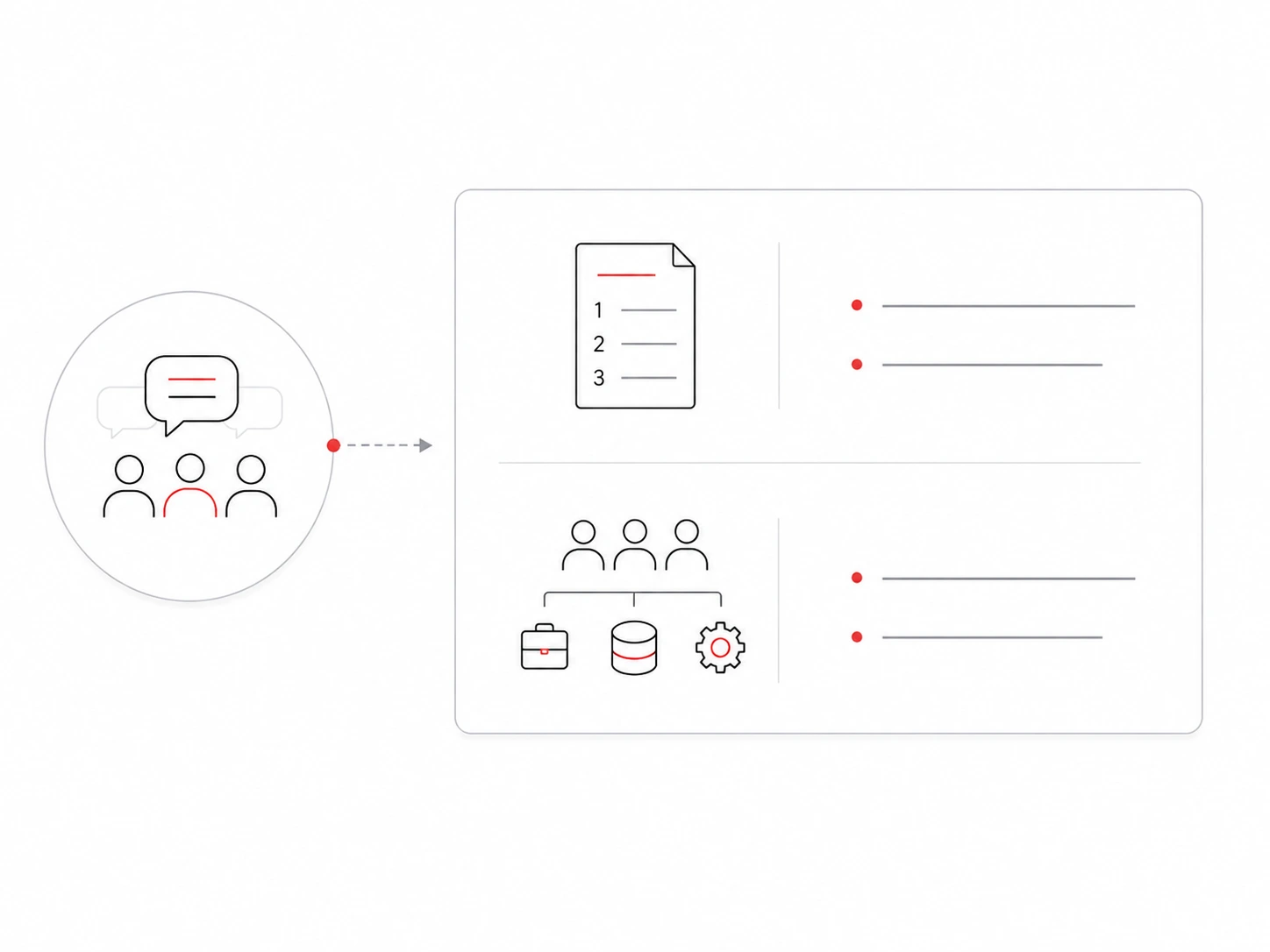
Agreeing what the day is for
The business problems on the table, stated without AI in the sentence. Anything that cannot be phrased that way rarely survives the afternoon.
- A written problem list, ranked before any technology is discussed
- Attendees span business, data, and engineering, not one function
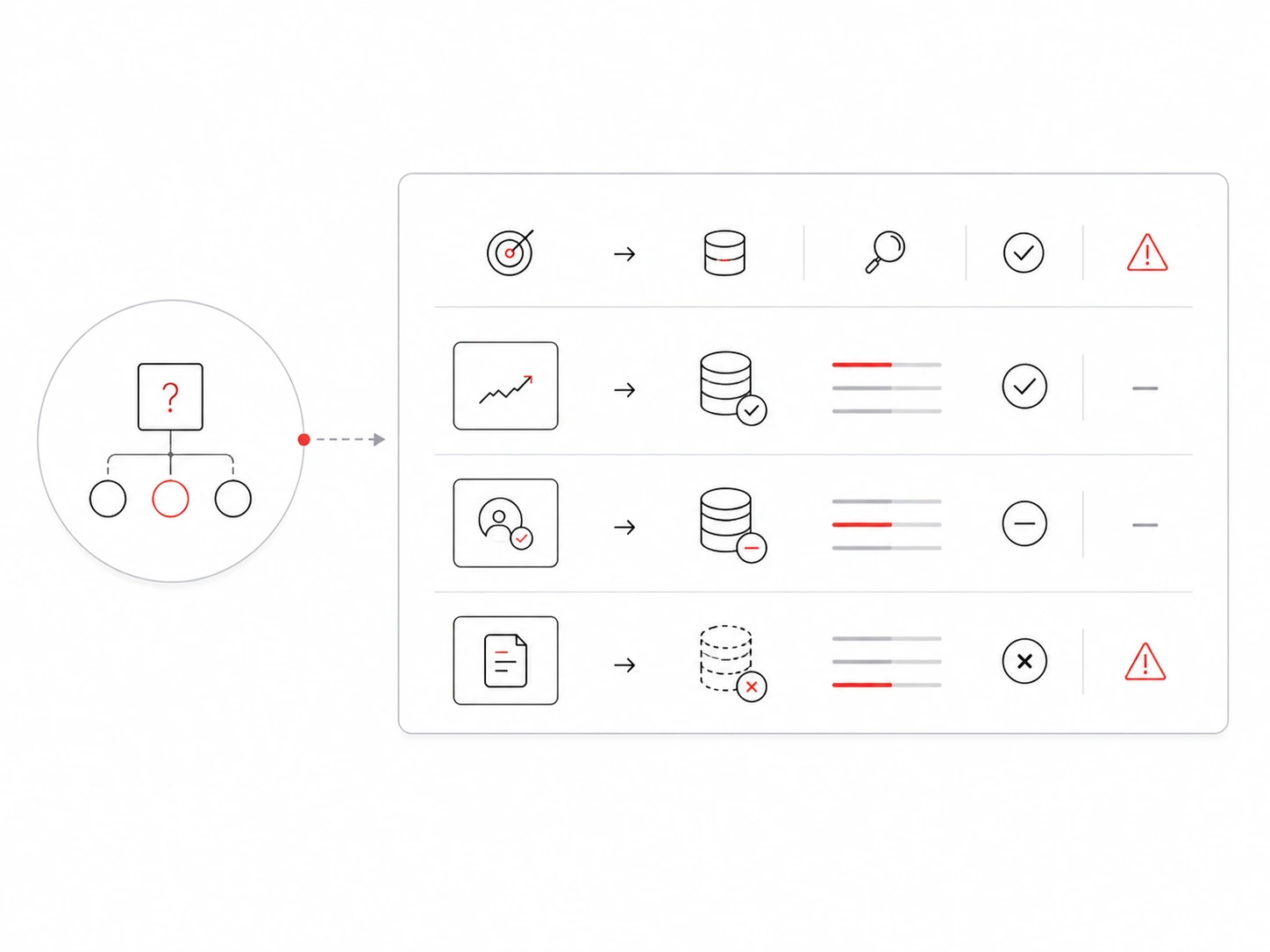
Turning problems into candidate use cases
Each problem gets one or more candidate approaches, with the data it would need and a rough sense of what already exists internally.
- Existing data and systems are named for each one, or flagged as missing
- Candidates are written as a task a system performs, not a capability
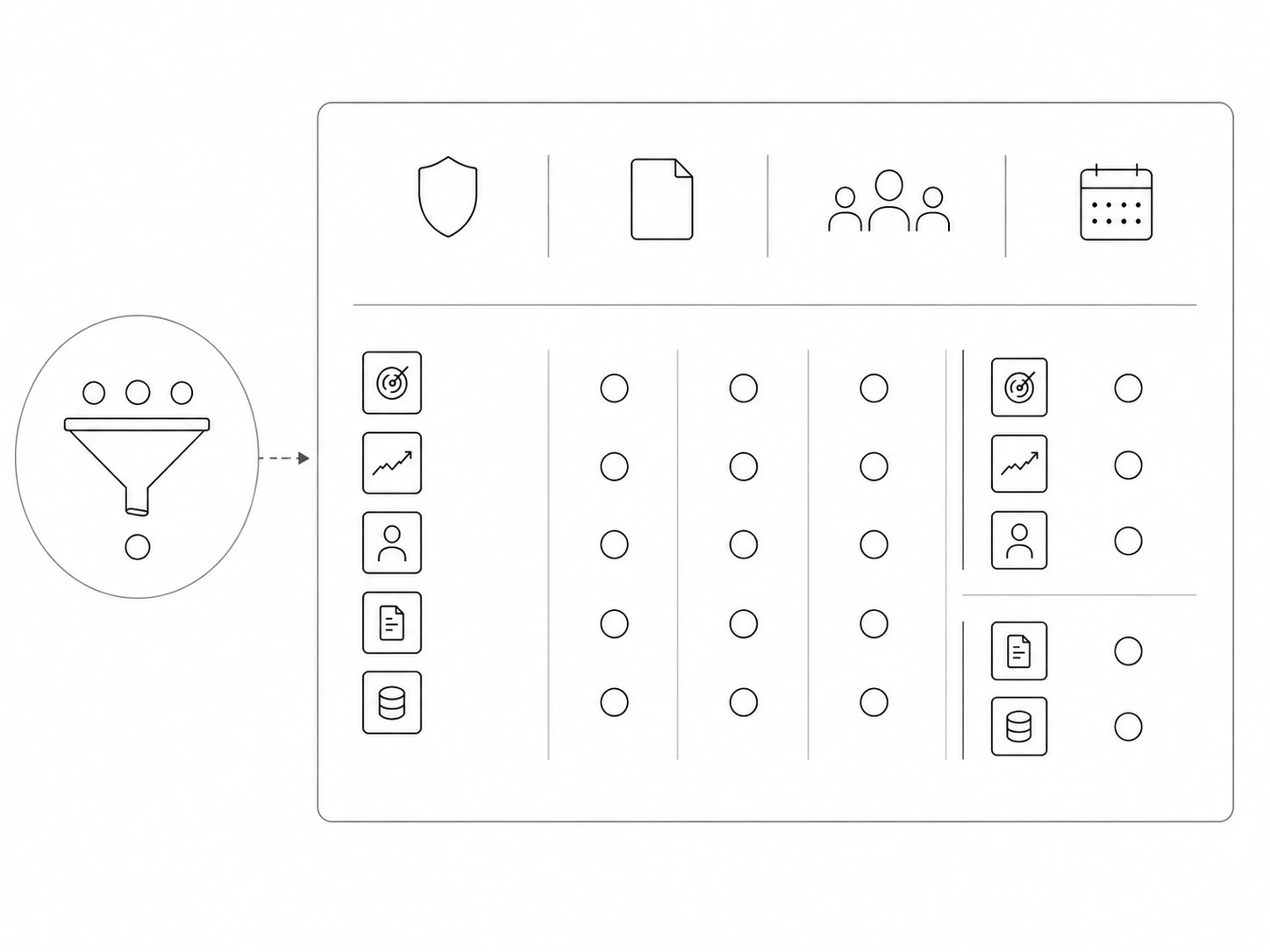
Cutting the list against real constraints
Feasibility, compliance exposure, and available capacity are applied in the room, so the list shrinks while everyone can see why.
- Anything blocked is recorded with the blocker, not silently dropped
- Disagreement between functions is resolved live rather than by email
Leaving with owners and a first move
Each surviving candidate gets an owner and a defined next action. An AI discovery workshop that ends without both has produced a conversation.
- Candidates that need a verdict on data route into the readiness work
- A written summary circulated to everyone who attended
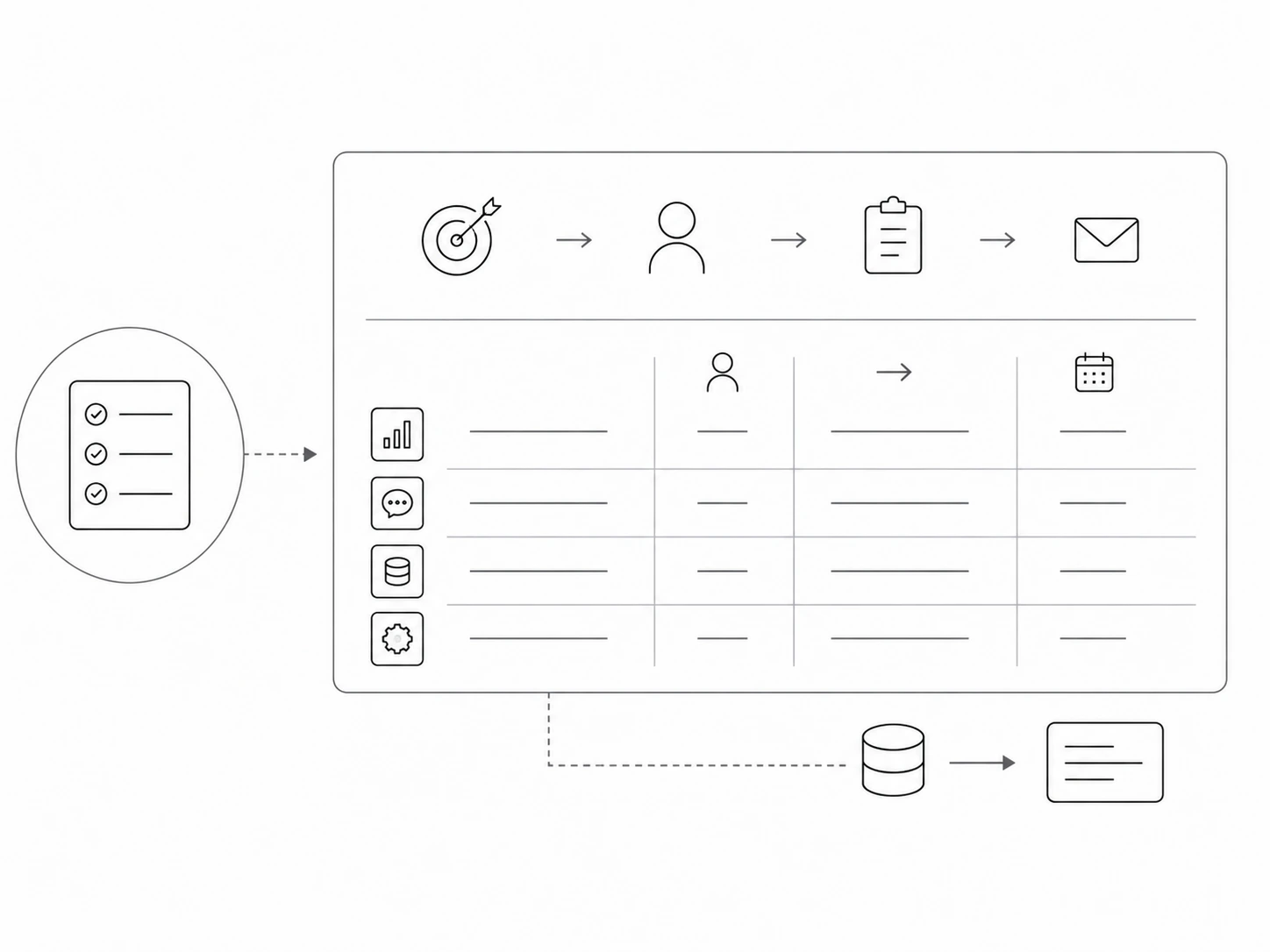
AI strategy workshop
What you leave with
Ranked Initiative List
An AI strategy workshop starts from candidates you already have, and ends with them ordered by value, effort, and dependency.
- Value and effort per item
- Dependencies made explicit
- An agreed cut-off line
Sequenced Phases
The order the work happens in. An AI strategy workshop checks it against hiring plans, platform commitments, and the quarters you have.
- Phase boundaries and dates
- Capacity assumptions
- What waits and the reason
Owner Per Initiative
A named person for each item, agreed in the room, with the authority the role needs rather than the title it happens to carry.
- Named owner per item
- Decision rights agreed
- An agreed escalation path
Success Measures
What each initiative is expected to move, the baseline it moves from, and how that baseline gets measured before work starts.
- Baseline per initiative
- Target and time frame
- How it will be measured
Stop Criteria
The evidence that would justify pausing or killing each initiative, written down while everyone is still calm about it.
- Checkpoint dates agreed
- Evidence needed at each
- Who makes the final call
Written Rationale
The reasoning behind the order, so the plan can be defended in a budget review months later without reconstructing the debate.
- Why each item ranked
- Options that were rejected
- Assumptions on record
How to buy advisory without wasting it
Advisory goes wrong in predictable ways. Seven things worth settling before an engagement starts, whoever you hire.
Define The Decision
Retainers drift when nobody names the decisions the advisor is there to support. Write them down and revisit them quarterly.
Set Access Expectations
Advice given without access to systems and people is guesswork dressed up. Agree what the advisor can see on day one.
Keep It Vendor-Neutral
Ask which platforms the advisor earns from. AI advisory services tied to a reseller quota bend toward a single answer.
Name The Counterpart
One internal owner who receives the advice and acts on it. Without that, recommendations sit unread in a shared drive.
Cap The Ceremony
Standing calls fill themselves. Shorter sessions tied to real decisions beat a monthly slot that exists because it exists.
Write Decisions Down
The value compounds only if the reasoning is recorded. Verbal advice leaves the building with whoever happened to hear it.
Agree On An Exit
A good advisory engagement should get smaller over time. If it only ever grows, capability is not transferring to your team.
Bring the decision you are
stuck on
Business First
Code Next
Let’s talk
Where advisory connects
The work that usually sits either side of AI advisory services.
Readiness Assessment
A structured diagnostic of data, platform, and team readiness, for when a decision needs a verdict on inputs first.
Generative AI & LLM Consulting
Model selection, evaluation, and prompt architecture once a language-model initiative clears the ranking.
Custom AI Development
Build capacity for the initiatives that survive prioritization, from data pipelines through to production.
AI Governance & Compliance
Policies, controls, and audit trails for when advisory surfaces regulatory exposure that needs dedicated work.
FAQ
Workshops, decision reviews, vendor and proposal assessment, and guidance between them. The scope is set by the decisions you face rather than by a fixed deliverable list. CodeIT runs advisory either as a fixed-scope workshop or as a recurring engagement with a named advisor.
Scale and commitment. Advisory answers the decisions in front of you now, without producing a complete program roadmap. Where the question is what the entire program should look like, a full roadmap engagement fits better. The two are often run in sequence.
Yes. A one-day workshop is the most common entry point and carries no obligation to continue. Some teams run one and take it from there internally. That is a legitimate outcome, and it gets said out loud at the end of the day rather than months later.
One accountable owner who can act on the advice, plus access to the people holding context: data, engineering, and the business function affected. Advisory without an internal counterpart produces documents nobody implements.
No. AI tools used on CodeIT engagements run with training disabled and sensitive artifacts excluded, inside an ISO 27001-certified information security management system. Client code, documents, and data do not train external models.
It varies with the decisions in play, and it should shrink over time. Engagements run month to month rather than annually, so continuing is a decision you make against evidence rather than a contract you are already inside.
Business First
Code Next
Let’s talk
Bring the AI decision you are stuck on