
Legacy Application Architecture Assessment and Phased API Migration Planning
Project information
Preserving business operations while replacing legacy dependencies
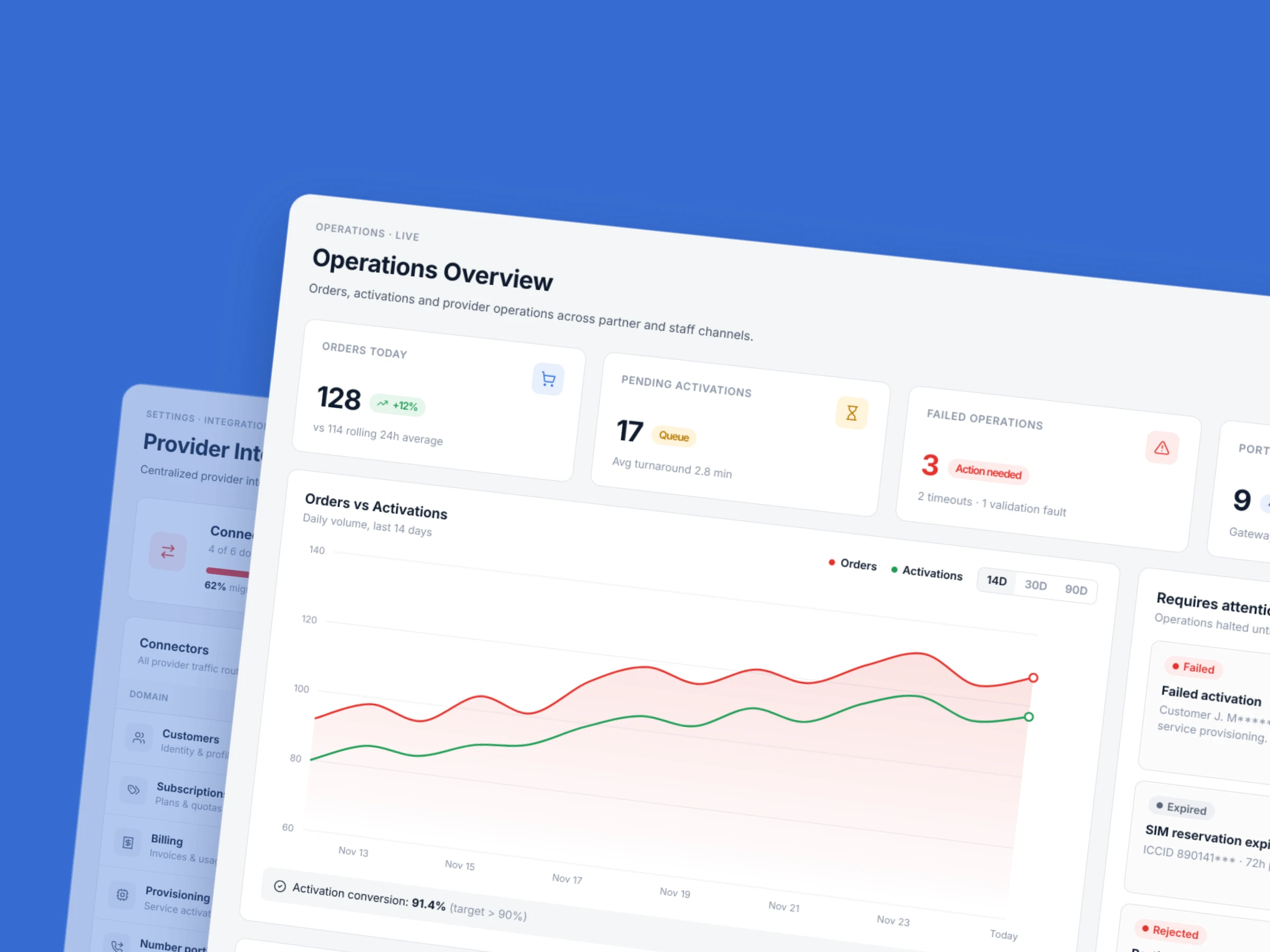
A subscription-based service provider relied on an established web application for sales, customer registration, and subscription management. Internal employees used a separate third-party platform for customer service, provisioning, and operational activities.
When the external technology provider announced the retirement of its management platform and legacy APIs, the client needed to replace critical dependencies without disrupting established business workflows.
CodeIT assessed the existing application, evaluated architecture alternatives, and developed a phased modernization proposal focused on preserving business logic, controlling integration risks, and avoiding unnecessary redevelopment.
Challenge
The retirement of the external provider’s infrastructure introduced five interconnected challenges:
Undocumented Business Logic
Years of business rules were embedded in the application code, making a complete rewrite difficult to validate without risking functional changes.
Third-Party API Dependencies
Critical workflows relied on retiring interfaces, while replacement APIs lacked some functionality available in the existing system.
Fragmented Business Operations
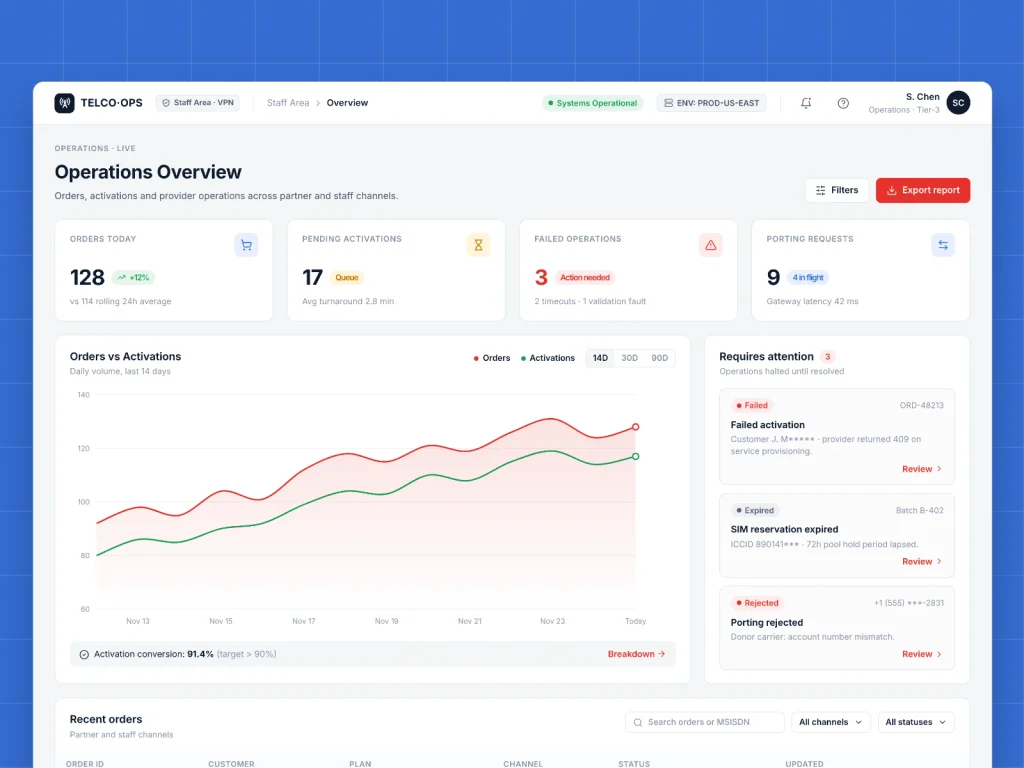
Sales and internal staff used separate systems, requiring operational consolidation without unnecessary infrastructure or duplicated integrations.
Security and Access Boundaries
External partners and employees required different access levels, particularly for administrative operations and sensitive customer-related information.
Limited Testing Capabilities
The external provider offered no dedicated API testing environment, increasing the risk of integration issues emerging only in production.
Solution
Architecture decisions grounded in business and operational requirements
CodeIT reviewed the application, analyzed integration dependencies, and compared modernization alternatives against implementation complexity, security requirements, and operational risks.
The assessment informed six key architectural decisions and a phased implementation plan.
Key Architecture Decisions
- Modernization Over Rebuild. Preserve the existing application and upgrade its framework instead of recreating undocumented business rules, increasing redevelopment effort, and risking changes to proven workflows.
- Centralized Integration Layer. Introduce a provider abstraction layer instead of replacing API calls throughout the application. Legacy connectors could be replaced without rewriting core sales workflows.
- Shared Application Architecture. Consolidate operational functionality within a securely isolated staff area, avoiding a second codebase and duplicated integrations. Separate deployment remained an option for stricter isolation.
- Defined Data Ownership. Keep customer, subscription, and billing records at their authoritative source. Store only application-owned orders, workflow states, audit records, and selected operational information locally.
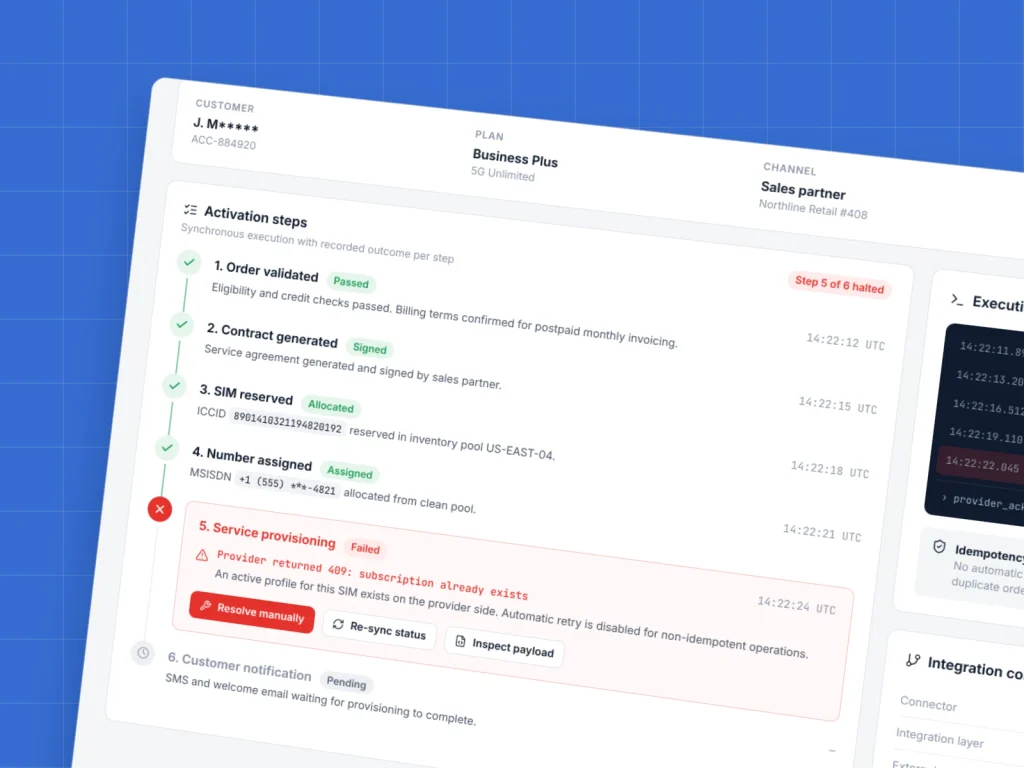
- Proportionate Processing Architecture. Use synchronous processing with explicit status tracking rather than introducing a queue with automatic retries that could duplicate non-idempotent transactions.
- Phased Releases Over Single Cutover. Separate framework modernization, provider API migration, and operational replacement into testable releases with acceptance criteria and recovery options.
Proposed Solution Architecture
The target architecture combined three components within a shared application environment:
Modernized Application Core
- Preserved existing registration, sales, and order workflows.
- Planned the upgrade to a supported PHP runtime and Mezzio framework.
- Incorporated a dedicated operational interface for internal staff.
Centralized Provider Integration
- Separated application business logic from external REST and SOAP interfaces.
- Enabled provider connectors to change without rewriting core workflows.
- Defined local handling for order states, activation steps, contract generation, and number reservation.
Secure Operational Access
- Restricted staff access through the corporate VPN and SSO with MFA.
- Defined role-based permissions and dedicated authorization checks.
- Required encryption and audit logging for sensitive credentials.
Phased Migration and Risk Control
CodeIT structured the implementation into three releases, each addressing a distinct category of technical risk.
Phase 1 — Application Modernization
Upgrade the framework, address identified security weaknesses, strengthen authentication, and establish automated workflow checks before introducing the new provider APIs.
Phase 2 — API Migration
Replace legacy connectors through the integration layer, implement missing provider functionality within the application, and validate critical sales and provisioning workflows.
Phase 3 — Operational Replacement
Introduce the secure staff area, migrate required inventory records, and replace workflows dependent on the retiring third-party back-office system.
Validation Without a Provider Sandbox
The proposed testing strategy combined simulated provider APIs with controlled live checks using designated test accounts. Sensitive write operations would be validated individually to avoid unintended changes.
Scripted deployments, rollback procedures, and temporary parallel operation with the retiring system provided additional recovery options.
Result
A Modernization Blueprint
CodeIT’s architecture proposal established a technical direction for replacing legacy dependencies while retaining valuable application functionality.
Preserved Business Logic
A justified modernization approach designed to protect established workflows without the cost and validation risks of a full rebuild.
Reduced Integration Coupling
A centralized provider layer designed to isolate external API changes from core business processes and simplify future integration maintenance.
Defined System Boundaries
Clear ownership of provider and application data, limiting unnecessary duplication, synchronization requirements, and migration complexity.
Controlled Transition Risks
A phased migration roadmap with explicit validation requirements, external dependencies, release boundaries, and recovery options.
Actionable Engineering Plan
A proposed target architecture, implementation scope, estimates, technical assumptions, and risk assessment to guide subsequent engineering work.
The outcome of the design stage was a practical modernization blueprint that connected architecture decisions with implementation feasibility, operational continuity, and long-term maintainability.
This case study covers architecture assessment, solution design, and modernization planning. Production implementation outcomes are outside its scope.
Technology stack
- PHP
- Mezzio
- MySQL
- REST and SOAP APIs
- Corporate SSO
- MFA
- RBAC
- Automated Testing
- CI\CD