
Generative AI Consulting
Decide what to build with language models before you build it. Model choice, retrieval design, evaluation, and cost, settled against your use case.

Business First
Code Next
Let’s talk
Model choice is rarely the problem
Generative AI consulting answers the questions that decide whether an LLM project works. Which model, retrieval or fine-tuning, what counts as a correct answer, and what it costs per thousand requests.
This is advisory work, not delivery. Where you need the system built, that sits with Generative AI Development Services. Here the output is a written architecture decision, an evaluation set, and a cost model you can check.
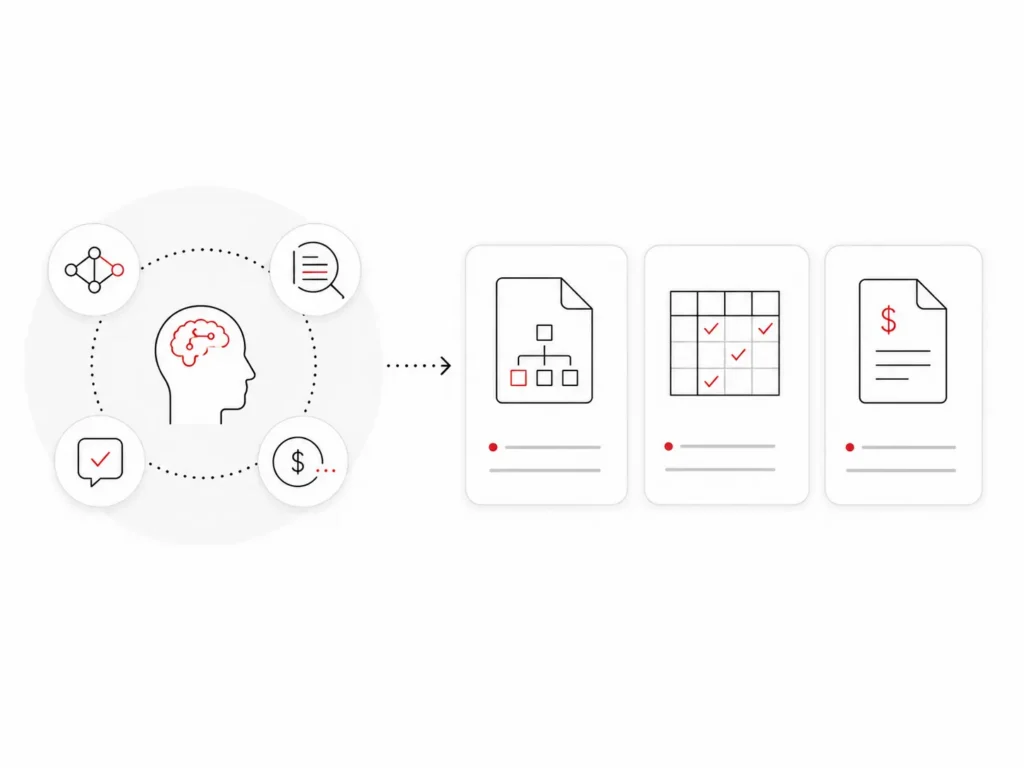
Decisions this engagement settles
What you get
Model Selection
Candidate models scored on your tasks and your data rather than on public benchmarks, with the cost and latency each one implies.
- Task-level comparison
- Cost and latency per model
- Fallback model named
Retrieval Or Fine-Tuning
Which approach the use case actually needs. Enterprise RAG implementation is the usual answer, and the exceptions are worth naming early.
- Approach with reasons
- Data preparation needed
- Refresh and reindex plan
Evaluation Set
A test set built from real cases, with the grading rules written down, so quality becomes a number instead of an opinion.
- Cases drawn from real work
- Grading rules in writing
- Baseline score recorded
Guardrails And Failure
What the system refuses, what it escalates, and what happens when it is confidently wrong. Designed before launch, not after it.
- Refusal and escalation rules
- Logging and review path
- Human checkpoint defined
Cost At Volume
Token, retrieval, and infrastructure cost modelled against projected usage, including what happens if that usage triples.
- Cost per thousand requests
- Volume sensitivity check
- Main cost driver named
Build Or Buy
Whether a vendor product covers this, or whether custom LLM solutions are justified by the data and the workflow involved.
- Vendor options compared
- Switching cost estimated
- Recommendation with reasons
Settle the architecture before the build starts

Business First
Code Next
Let’s talk
Agentic AI consulting: when agents earn their complexity
Agents add failure modes that a single model call does not have. Agentic AI consulting starts by testing whether the workflow needs one at all.
Multi-step tasks with branching, where the next action depends on the last result. If the flow is fixed, a scripted sequence is cheaper to run and far easier to debug.
Which systems the agent may call, with what permissions, and what it may never touch. Written as a whitelist before any tool is wired in, rather than trimmed back after an incident.
What happens when a step fails halfway. Partial completion is the most common production problem, and it is a design decision rather than a bug to fix later.
Agents retry, and every retry costs money. Agentic AI consulting models the cost of a completed task, not the cost of a single model call. That is the number that surprises finance.
Whether you can reconstruct why the agent did what it did. Without step-level logging, debugging an agent in production is guesswork with a budget attached.
Most agent proposals shrink to two chained calls and a rule. That outcome gets reported plainly, because complexity nobody on your team can maintain is not a win.
How the engagement runs
Four phases. Scope depends on how many use cases are in play, and that gets agreed in writing before any work starts.
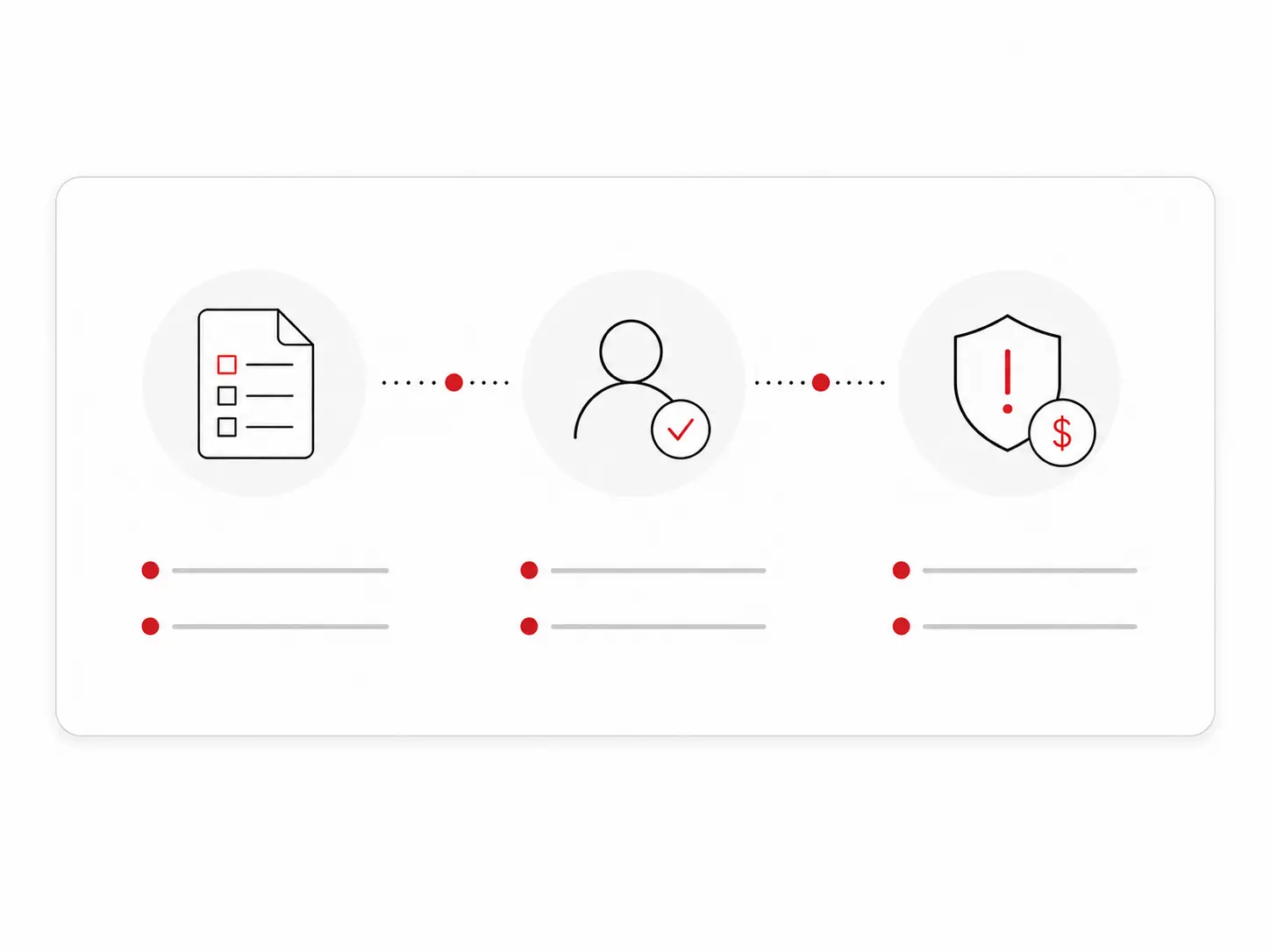
Understanding the task, not the tech
What the system would do, who checks the output, and what a wrong answer costs. LLM implementation consulting starts here or it starts blind.
- The task is described as inputs, outputs, and an acceptance rule
- The cost of a wrong answer is stated, because it sets the guardrails
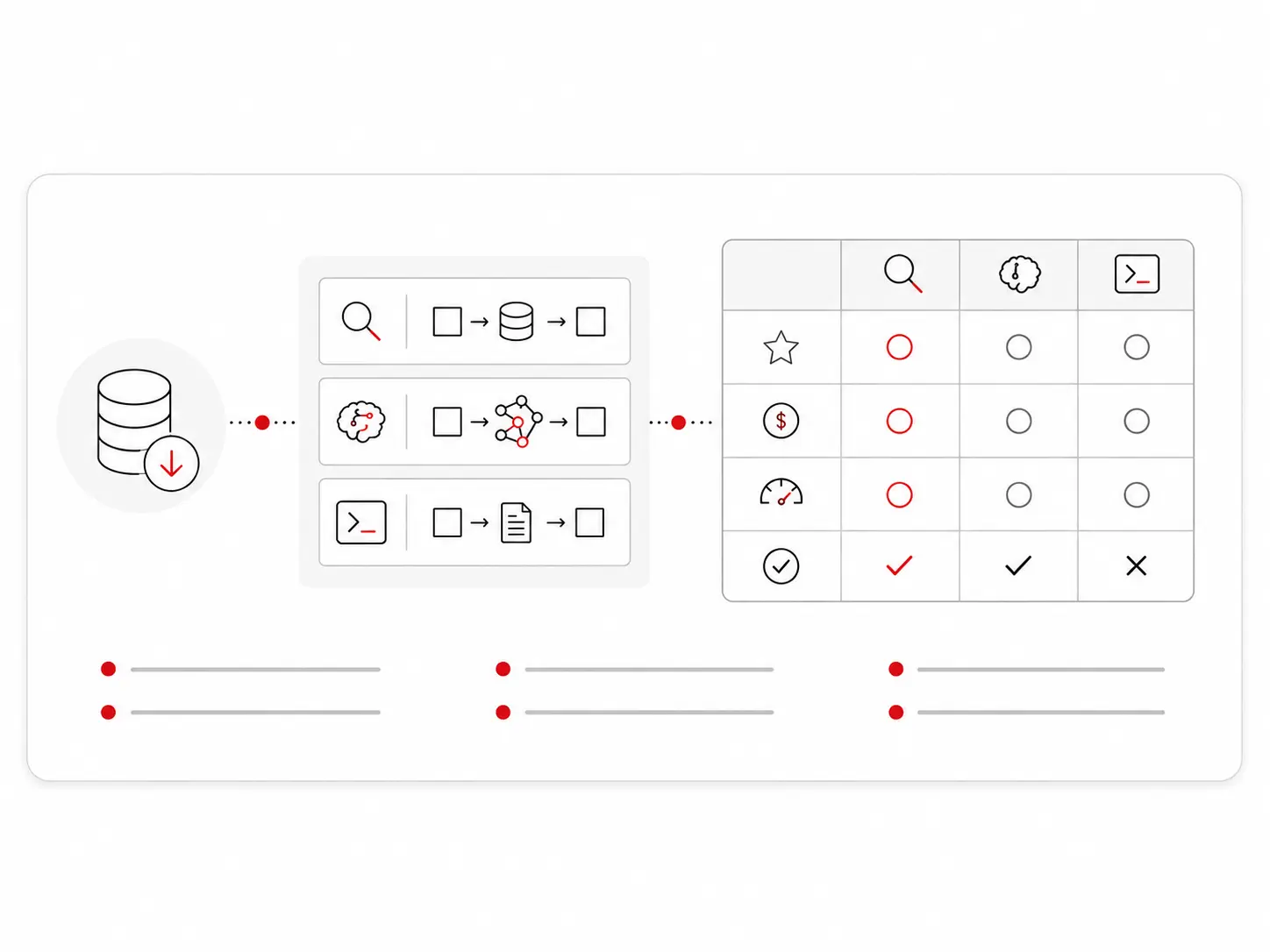
Deciding what good looks like
A test set is built from real cases before any model is chosen, so the comparison has something to measure against.
- Cases come from your work, not from a public benchmark
- Grading rules are written so that two people would score the same
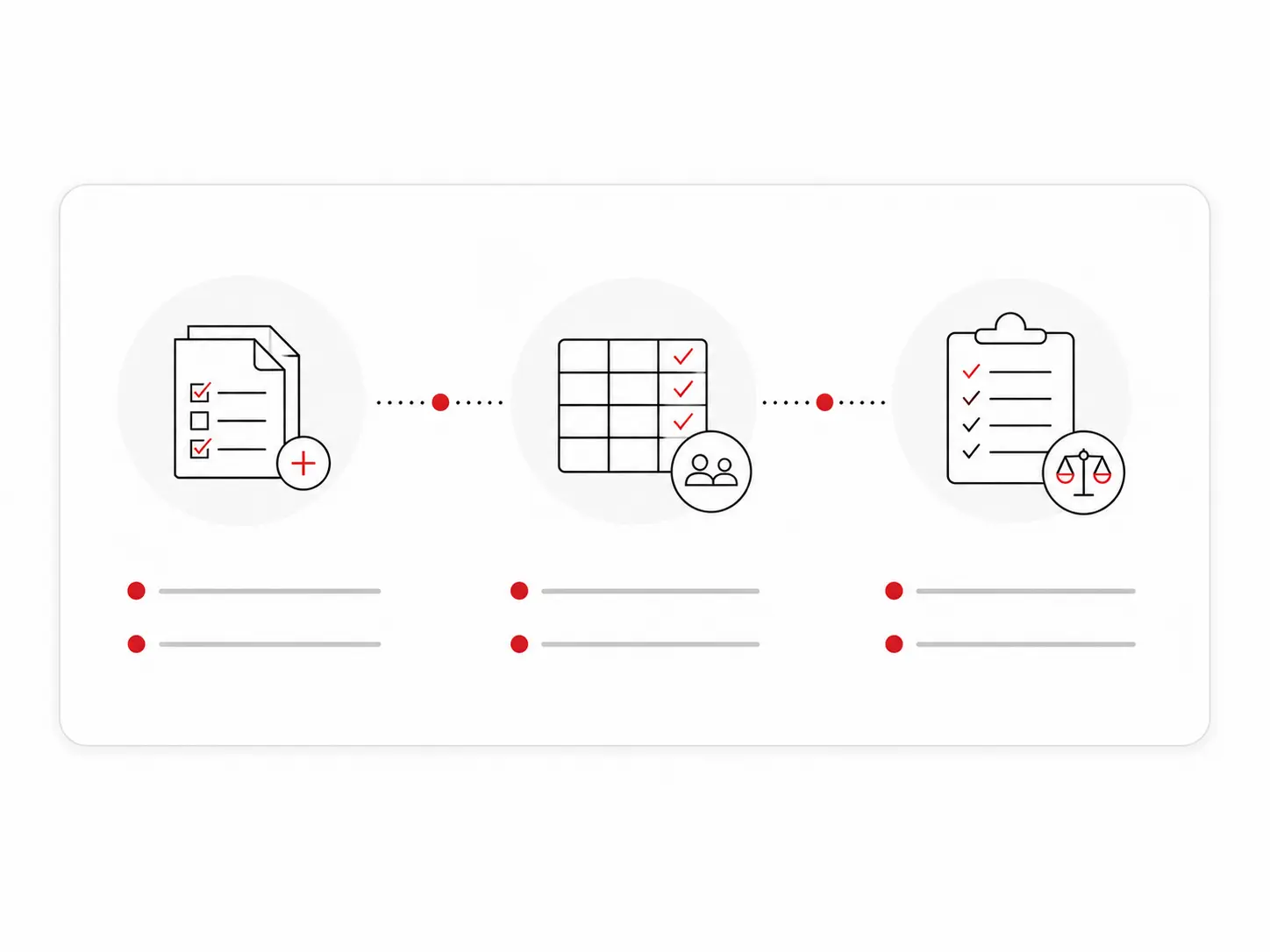
Comparing approaches on the same test
Two or three candidate designs are scored on the same evaluation set, with cost and latency measured rather than estimated.
- Retrieval, fine-tuning, and prompt-only options are compared
- Results are shared with the numbers behind them, not just the verdict
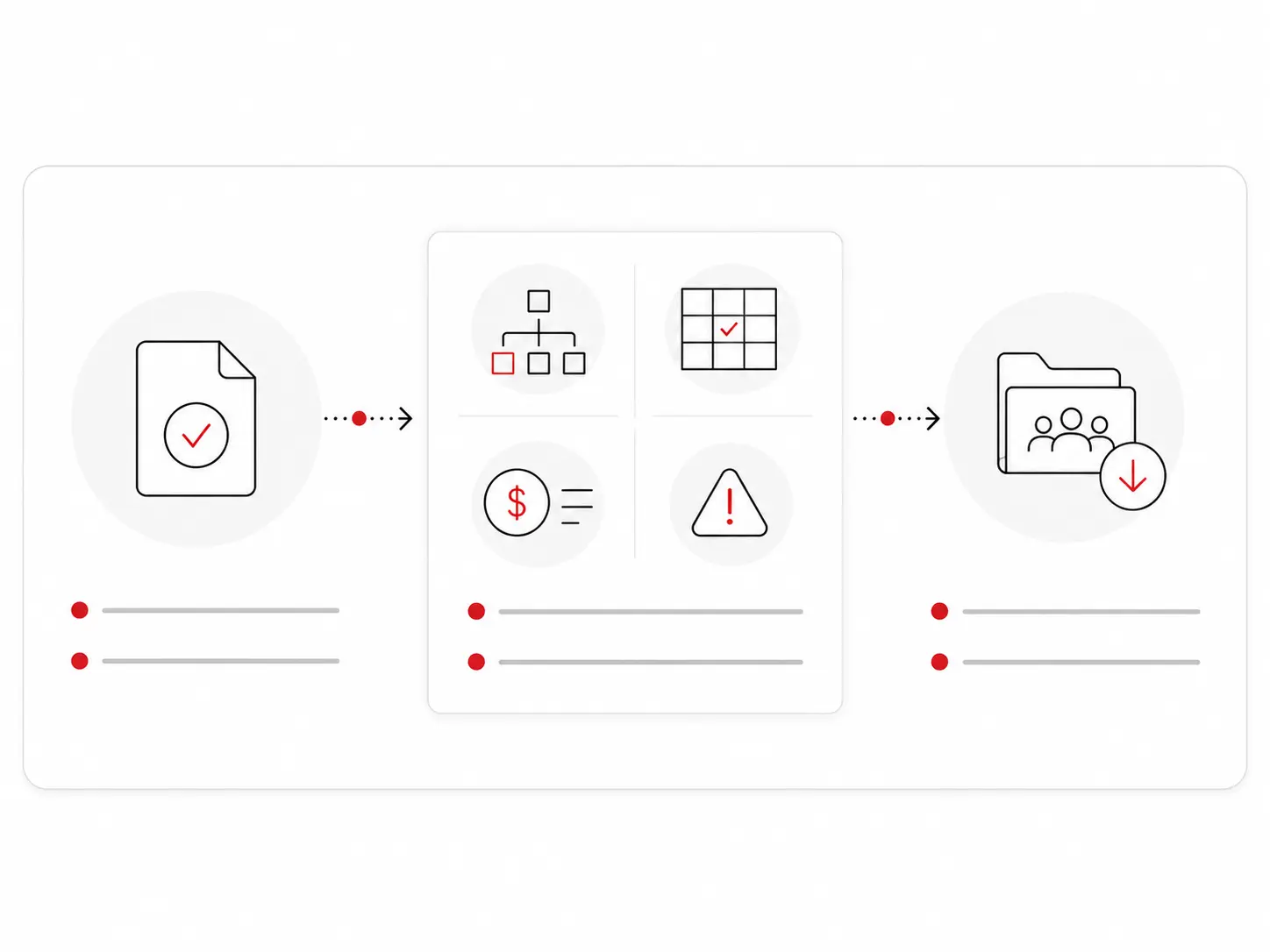
A written recommendation you can act on
The architecture decision, the evaluation set, the cost model, and the risks, in a document your team owns afterwards.
- The evaluation set transfers to you and can be re-run at any point
- Where the recommendation is not to build, that is stated plainly
Where LLM projects fail after the demo
Seven failure patterns worth checking before budget is committed. Most LLM consulting services meet the same ones.
No Evaluation Set
Quality gets judged by whoever is looking at the screen. Without a fixed test set, every change becomes an argument rather than a measurement.
Public Benchmark Bias
A model chosen on public leaderboards often loses on your data, because your documents are messier than anything in the benchmark.
Retrieval Quality
Most wrong answers trace back to retrieval rather than generation. The model answered correctly, but from the wrong passage.
Integration Debt
The model works and nothing can reach it. LLM integration services are usually where the timeline actually goes.
Cost At Real Volume
Costs modelled on a demo underestimate production by a wide margin, because retries and long contexts are rarely counted in.
No Refresh Plan
The index is built once and never updated. Answer quality decays quietly, and users stop trusting the system before anyone notices.
Unclear Ownership
Nobody owns output quality after launch. Model drift and changing source documents need a named owner and a review cadence.
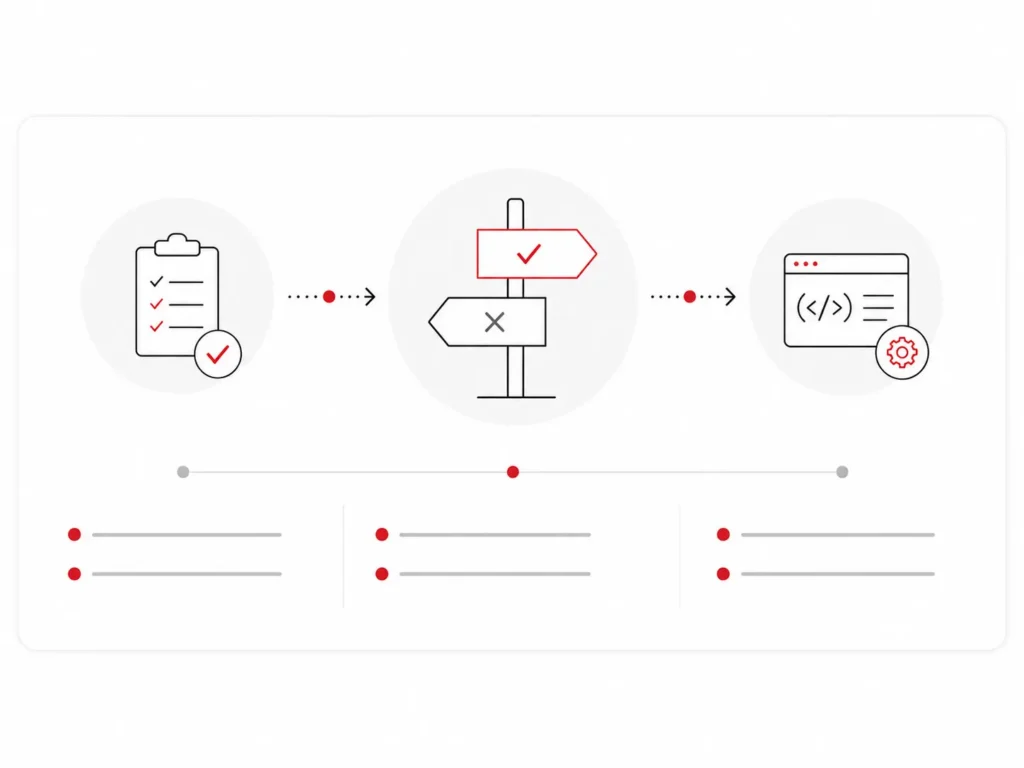
Consulting or build: which one you need.
If the decision is already made and the requirement is clear, you need engineers rather than advisors. If two approaches both look reasonable and the cost difference is six figures, an outside read pays for itself.
Generative AI consulting ends with a decision document. Building the system, running RAG consulting services through to production, and operating it afterwards are separate engagements with their own scope.
Bring a use case and the constraints around it
Business First
Code Next
Let’s talk
Where this leads next
The pages that sit around a generative AI consulting engagement.
AI Strategy Consulting
The hub engagement, for when the question is which AI initiatives to fund rather than how to build one of them.
Ongoing AI Advisory
Lead-level guidance between decisions, for once the architecture is settled and priorities keep moving on you.
Generative AI Development
Delivery capacity for the system itself: building, integrating, and hardening what the decision document specifies.
AI Knowledge Assistant
A worked retrieval example: how indexing, evaluation, and guardrails come together in a delivered product.
FAQ
An architecture decision with the reasoning behind it, an evaluation set built from your cases, a cost model at projected volume, and a risk list. All of it transfers to your team and can be re-run without CodeIT in the room.
Retrieval covers most enterprise cases, because the knowledge changes faster than a fine-tuned model can be retrained. Fine-tuning earns its place for format, tone, or narrow classification. RAG implementation services are the common answer, but the evaluation set decides it, not a preference.
Yes. A review covers the evaluation approach, retrieval quality, guardrails, and cost. It usually starts by building the test set that was skipped the first time round, because without one there is nothing to compare against.
The comparison stays vendor-neutral and includes both hosted and open-weight options. CodeIT resells no model provider, so the recommendation follows the evaluation results rather than a partnership agreement.
No. AI tools used on CodeIT engagements run with training disabled and sensitive artifacts excluded, inside an ISO 27001-certified information security management system. Client code, documents, and data do not train external models.
It depends on how many use cases are in scope and how quickly a representative sample can be shared. Building the evaluation set is usually the longest step, and it is the one that makes everything after it reliable.