
AI Readiness Assessment
Find what will block your AI plans before you fund them. Data, systems, skills, and controls scored against the use cases you want to run.

Business First
Code Next
Let’s talk
Most AI plans stall on inputs, not ambition
An AI readiness assessment answers one question. Which of the use cases on your list can your organization actually deliver in the next four quarters, and what has to change first.
The output is a scored view of data, platform, skills, and controls, plus a fix list sized in effort. It sits under AI Strategy Consulting: readiness tells you what is possible, strategy decides what gets funded.
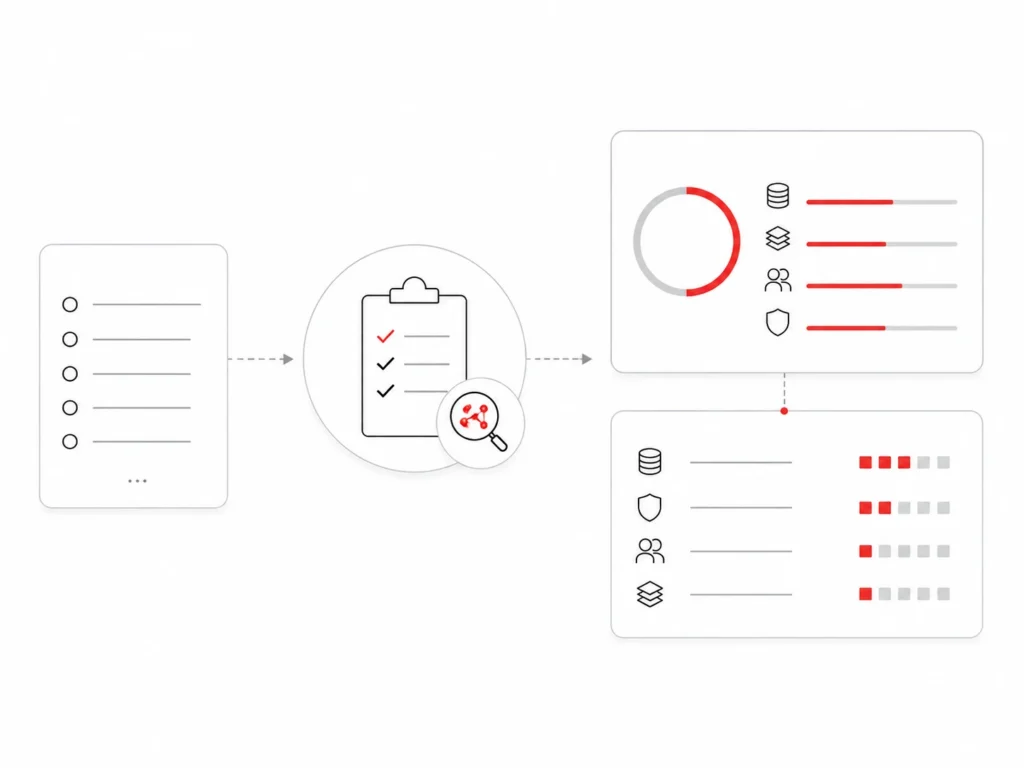
The AI readiness assessment framework in six dimensions
Each dimension is scored on evidence, not a self-report, using an AI readiness assessment framework enterprise teams can re-run each quarter.
Where the data lives, who owns it, and how far back it goes. Then whether the fields your use cases depend on are populated often enough to be useful. This is the dimension that stops most programs.
Whether your architecture can serve a model in production: latency, throughput, environments, and the integration points a use case would need. Prototypes rarely fail here. Production often does.
The rules deciding where data can go and which tools can touch it. Residency, retention, logging, and approval paths are checked before any use case is called viable.
Not whether people know the technology, but whether they have time for it. Capacity fully committed to the existing roadmap is the same as no capacity at all.
Whether the process a model would support is stable enough to automate. Unstable processes produce unstable training data and users who stop trusting the output.
Who approves a model going live, who owns it afterwards, and who answers when the output is wrong. The AI readiness assessment framework treats an unanswered version of this as a blocker, not a detail.
See what your data can support before you fund it
Business First
Code Next
Let’s talk
AI readiness assessment services.
What you get

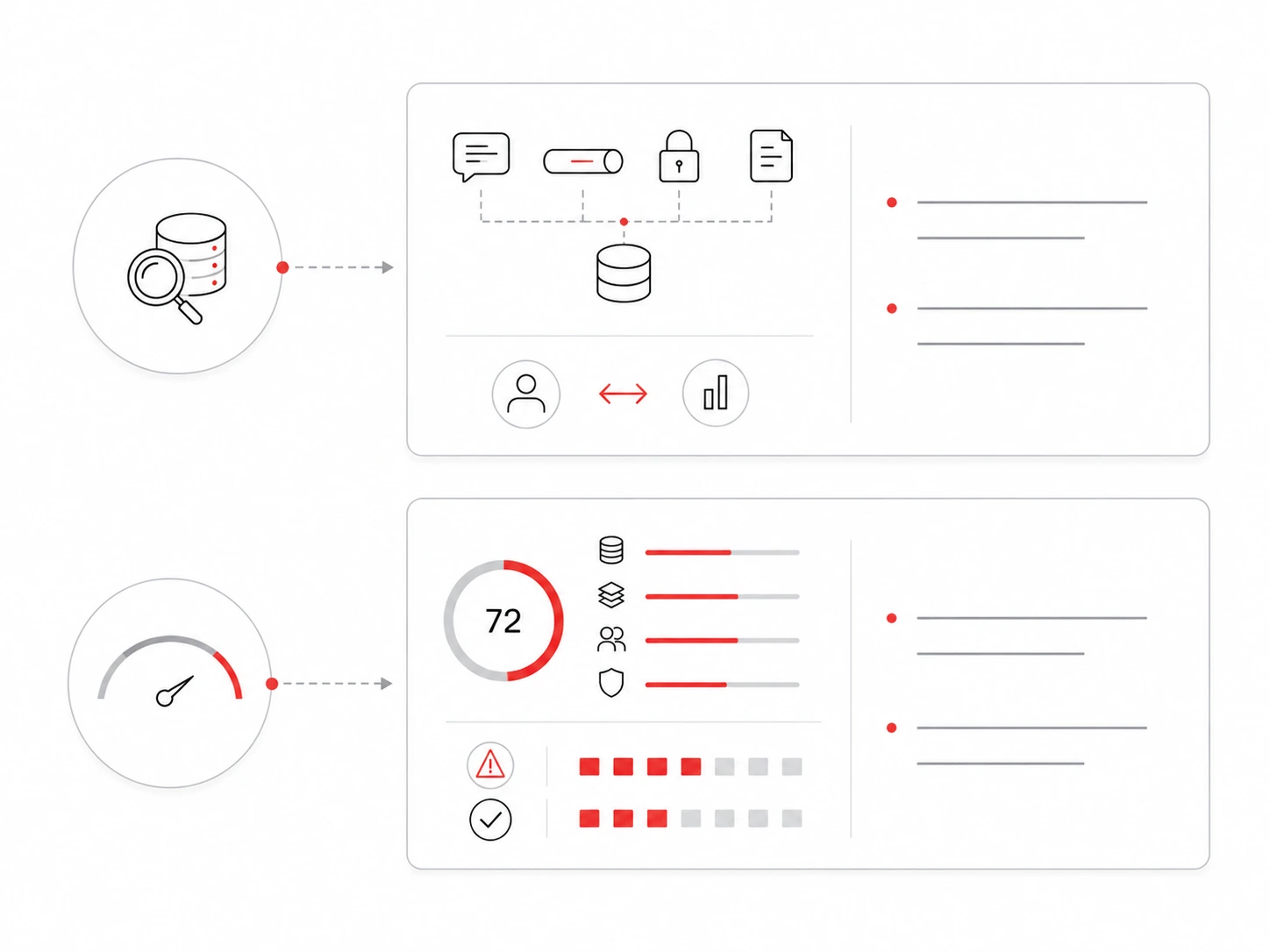
Scored Readiness Report
AI readiness assessment services start here: six dimensions scored against evidence, with the one that caps the rest named first.
- Six scored dimensions
- Evidence behind each score
- The score that caps you

Use-Case Feasibility
Every use case on your list marked deliverable, blocked, or blocked for now, with the specific blocker named in each case.
- Per use-case verdict
- Named blocker for each
- Time-to-viable estimate

Data Gap Register
The fields, systems, and access rules your priority use cases depend on, and where each one currently falls short of what they need.
- Source system inventory
- Field-level coverage gaps
- Access and ownership map

Fix Plan With Estimates
Every gap turned into a piece of work with an effort range and a place in the sequence, so readiness becomes a budget line.
- Effort range per fix
- Sequence and dependencies
- Suggested owner per item

Executive Readout
A working session with the people who fund the work. This is the part of the engagement that actually changes decisions.
- Findings and evidence
- Open disagreements named
- Decision options on the table

Reusable Scoring Sheet
The scoring model handed over at the end, so the next round runs in-house without booking a repeat engagement.
- Scoring model and rubric
- Interview question set
- Re-run without support
How the assessment runs
Four phases. How long an AI readiness assessment takes depends on how many systems and use cases are in play, and both are agreed up front.
Agreeing what gets assessed
Which use cases matter, which systems they touch, and who needs to be interviewed. A mutual NDA is signed before anything sensitive moves.
- Named stakeholders across data, engineering, and the business
- The use-case list you want tested, ranked by business priority
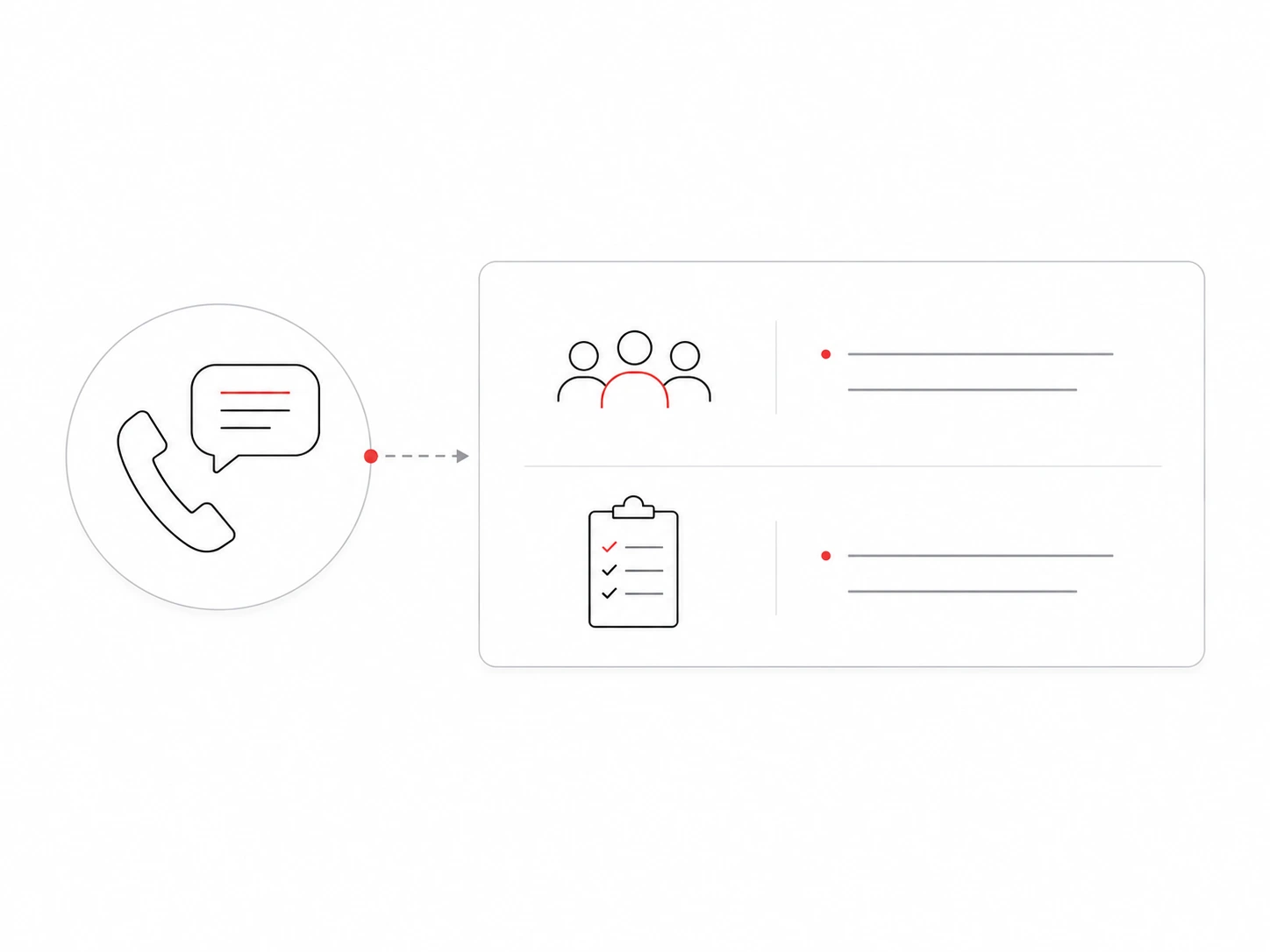
Looking at systems, not slides
Interviews plus direct review of schemas, pipelines, access rules, and delivery history. Self-reported answers get checked against what the systems show.
- Gaps between what teams believe and what the data shows are recorded
- Read-only access is requested where a claim needs verifying
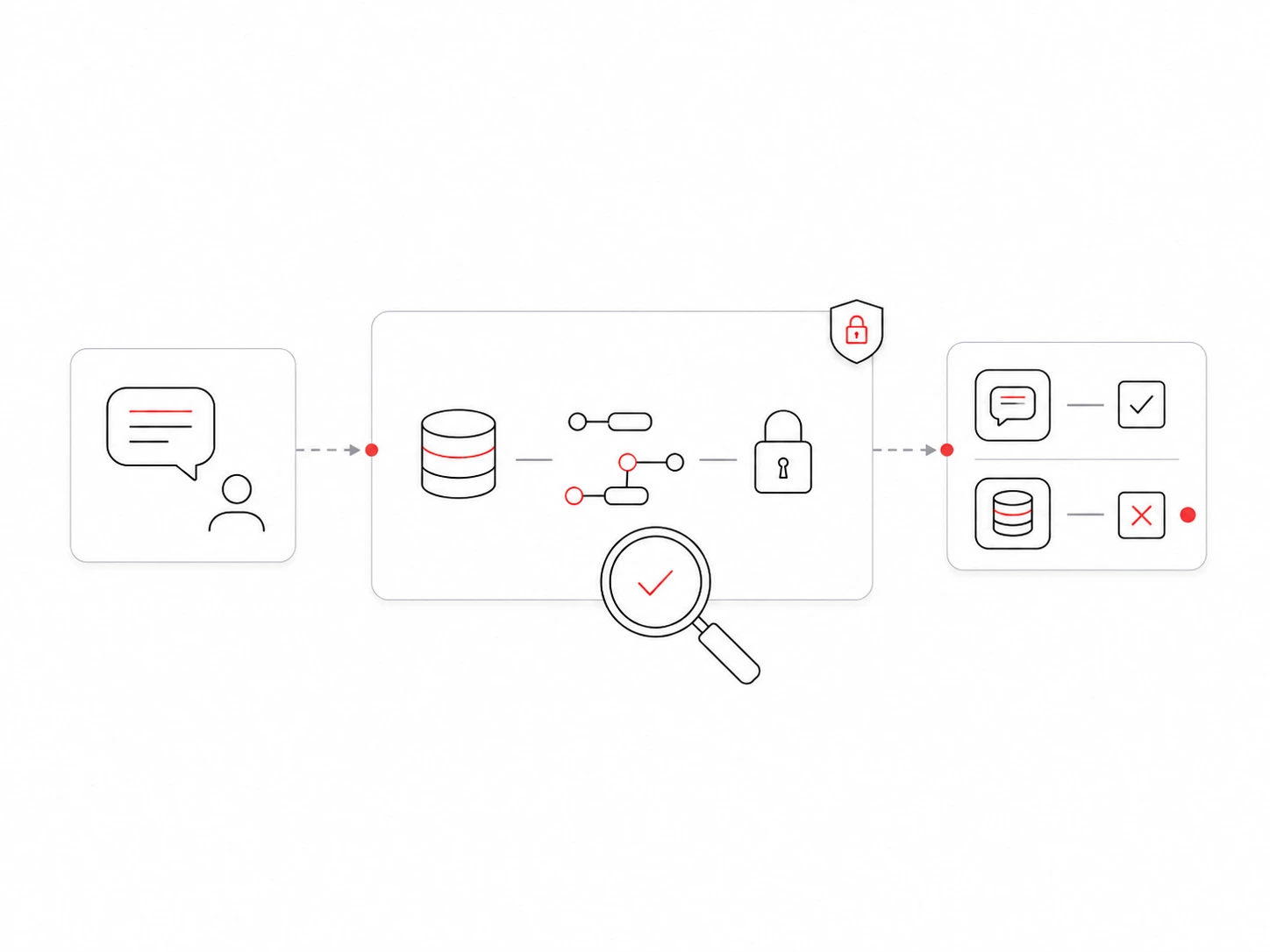
Turning findings into a score and a gap list
Each dimension is scored with the evidence attached, and every gap is sized in effort so it can be planned rather than debated.
- Blockers are separated from things that are merely inconvenient
- Scores trace back to a specific finding, never to an opinion
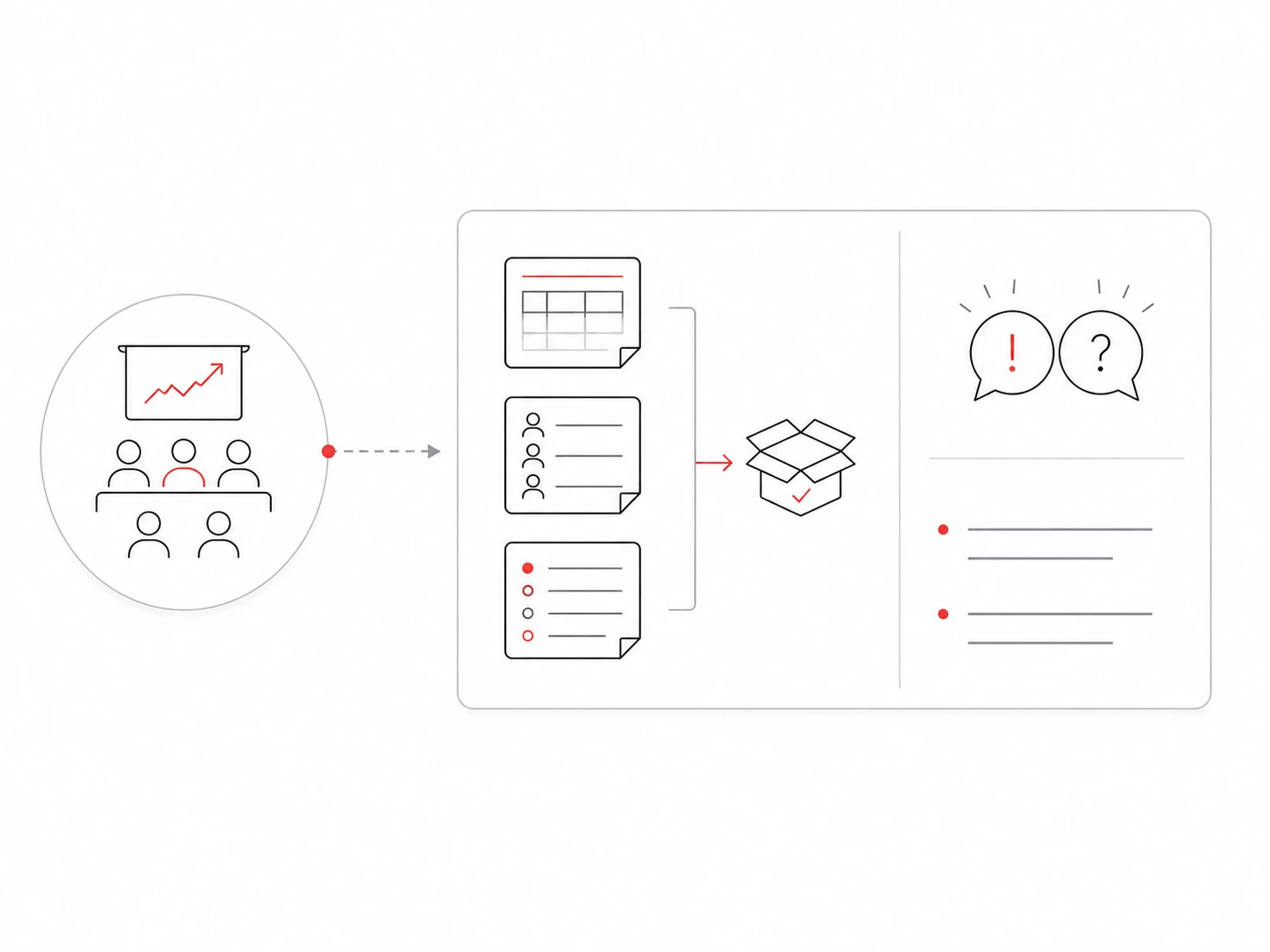
The decision session and what you keep
Findings are presented to the people who fund the work, and the scoring model is handed over so the assessment can be repeated later.
- The scoring sheet, interview set, and gap register transfer to you
- Disagreements are surfaced in the room rather than smoothed over
How to compare top AI readiness assessment firms
Seven questions that separate a real AI readiness assessment from a sales exercise. Ask every firm on the list, this one included.
Evidence Or Interviews
Ask whether scores come from system access or from a questionnaire. Self-reported readiness runs consistently higher than the real thing.
Independence From Build
Ask what happens if the answer is that you are not ready. A firm that only earns on the build has a reason to find you ready.
Named Deliverables
Ask to see the output format before signing. Top AI readiness assessment firms will show a redacted sample without hesitation.
Access Requirements
Ask what access is needed on day one. Vague answers here turn into a three-week delay while legal and security catch up.
Use-Case Anchoring
Ask whether scoring is tied to your use cases or to a generic model. A general score cannot tell you whether one use case is viable.
Sector Constraints
Ask how HIPAA, SOX, or CCPA change the assessment. If the answer is that they do not, it is not looking hard enough at your context.
Willingness To Report Red
Ask for an example where the verdict was not ready. The honest firms have several, and will walk you through one of them.
Get the gap list before the roadmap, not after
Business First
Code Next
Let’s talk
Where the assessment fits
An AI readiness assessment is the first step. These pages cover what usually comes next.
AI Strategy Consulting
Turning assessment findings into a funded, sequenced roadmap with owners, business cases, and governance settled up front.
AI Advisory Services
Ongoing lead-level guidance once the fix list is underway, so priorities stay current as the first results come back.
AI Prototype & PoC Development
A time-boxed build that tests a use case the assessment marked viable, before it becomes a funded program.
AI Governance & Compliance
Where the assessment surfaces regulatory exposure, this covers policies, controls, and audit trails in depth.
FAQ
Six dimensions: data availability and quality, platform and integration, security and compliance constraints, skills and capacity, process fit, and decision rights. Each is scored against the use cases you want to run, not against a generic industry model. The lowest-scoring dimension sets the ceiling for the rest.
Partly. An AI readiness assessment template gives you a first pass and a shared vocabulary. It cannot tell you whether a specific field in your CRM is populated often enough to train on. It cannot price the work to fix it either. The same limit applies to an AI readiness assessment checklist, and to an AI data readiness assessment template, which covers one dimension out of six.
Read-only access to the systems behind the use cases under review, plus time with the people who own them. Where access cannot be granted, the finding is recorded as unverified rather than assumed, and that is stated in the report.
That is a common and useful outcome. The report names what has to change first, sized in effort. The decision then becomes when to invest, rather than whether AI is possible at all. Fixing data ownership or access usually costs less than a failed pilot.
No. AI tools used on CodeIT engagements run with training disabled and sensitive artifacts excluded, inside an ISO 27001-certified information security management system. Client code, documents, and data do not train external models.
The scored report, the gap register, the fix plan, and the scoring model itself, including the interview set. 100% IP ownership of deliverables transfers under US governing law, so the work can be repeated internally next year.